
I Didn’t Know I Was Numb Until I Began to Feel
I didn’t know I was numb. I was functioning, creating, mothering, working and living my life. It was only when I began to feel more that I realised how much I hadn’t been feeling. What if disconnection doesn’t always look like disconnection?
There is a strange thing about numbness. You don't necessarily know you're numb.
I certainly didn't.
I was functioning. Living my life. Getting things done. Showing up. Laughing, creating, mothering, working, moving through the world. From the outside, I don't imagine many people would have looked at me and thought, Marie is disconnected from herself. And the truth is, I wouldn't have thought that either.
What I can recognise now is that somewhere underneath all that functioning there was a kind of void. A disconnection. Parts of me were alive and expressive, absolutely, and other parts were simply not available to my awareness. But I didn't know that then.
I didn't have the language for it. I didn't walk around thinking, I'm numb. It was only when I began to feel more that I realised how much I hadn't been feeling and that distinction matters.
Perhaps this is one of the stranger things about being human: we can only recognise some internal states once we have experienced something different.
We can live inside patterns of contraction, disconnection or shutdown for so long that they don't register as patterns at all. They simply feel like who we are. We adapt. We compensate. We become extraordinarily capable. We build lives, raise families, create, work, love, travel, achieve and contribute; all while parts of our inner world may remain beyond our conscious awareness.
Not because there is something inherently wrong with us, but because this human organism is constantly responding, learning and adapting to what it experiences. Until we begin developing a relationship with that organism from the inside, we may have no reference point for recognising what it has learned to filter and what has become automated.
You can function beautifully and still be disconnected from yourself
We tend to imagine disconnection as something obvious. Perhaps someone withdraws from life. They can't function. They lose interest in everything. They know something is wrong. But disconnection can be far more sophisticated than that.
We can be capable, productive, social, creative and outwardly successful while having very little relationship with what is actually moving inside us.
We can become extraordinarily good at reading a room while barely being able to read ourselves.
We can know what everyone else needs and have no idea what we need.
We can smile when something hurts.
Move quickly to the positive.
Explain our feelings rather than actually feel them.
We can have a beautifully articulated story about what happened without necessarily being in relationship with what happened inside the body and because this way of operating may have been with us for years, perhaps decades or a lifetime, it doesn't necessarily feel like disconnection.
It simply feels like me.
The strange thing is, I didn't know
A great deal of my own work happened behind closed doors. I can look back now and recognise that shame was woven through much of it. But I want to be really clear about this: I had no fucking idea it was shame. I wasn't walking around thinking, I'm ashamed of what happened to me. I’m ashamed of my mistakes. I'm ashamed of this part of myself. My body is shutting down because I don't feel safe.
Nothing was that neat. I only have those words now because I know the difference. At the time, it was simply the way my body operated. When I moved beyond what was familiar; socially, independently, intimately, in relationships, in being seen, something would happen in my body. What I can now recognise as a nervous-system response would begin. I would contract. Shut down. Disconnect. Have a smile on my face and walk away. But here's the important part:
I didn't know I was shutting down.
How would I? If you have lived inside a particular internal state for long enough, there isn't necessarily another state available against which to measure it. It was normal. The mind could keep going. I could talk. Smile. Work. Socialise. Achieve. Have relationships. Raise children. Travel. Create things. Be adventurous, even. And underneath all of that, my body could have its own thresholds around how much exposure, intimacy, uncertainty, feeling or visibility it could meet before something began to close.
I didn't call that shame. I didn't call it a nervous-system response. I didn't call it numbness. I didn't call it disconnection. I called it nothing, because I didn't know it was happening. And perhaps many of us do.
We give names to the things we can perceive but what about the things happening beneath our current level of perception? We may call ourselves shy, independent, strong, overly sensitive, easygoing, driven, private, a people-pleaser, an introvert, someone who “just doesn't do emotions” - without ever becoming curious about what is actually happening in the body beneath those identities.
This is where the inquiry becomes much bigger than emotional numbness.
What if some of what we believe to be our personality is also adaptation?
What happens when we begin to notice the body beneath the biography?
The contraction before the thought.
The holding of breath before the explanation.
The subtle disappearance of sensation.
The impulse to please, retreat, perform, control, fix or leave before we've consciously registered what we're responding to.
We don't need to immediately label any of it. Perhaps the beginning is simply becoming interested enough to notice.
I thought I knew what feeling was
For years, I could talk about emotions. I could understand things intellectually. I could analyse myself, explain myself, work on myself. But understanding a feeling and feeling a feeling are not necessarily the same experience. Feeling happens here. In this living organism. A tightening in the throat. Heat moving through the chest. A trembling belly. Pressure behind the eyes. Energy moving through the legs. A contraction. An expansion. A sensation that doesn't yet have a name.
Before sadness.
Before anger.
Before fear.
Before the mind has built the magnificent novel explaining why we feel what we feel, there is movement.
Sensation. Energy. Life happening inside the body.
Learning to remain present with that movement changed my relationship with myself. Because slowly, what had been numb began to have texture, and once I experienced greater connection, I could recognise disconnection. Once I experienced greater feeling, I could recognise numbness. Once I experienced what it was like for my body to remain present rather than disappear beneath me, I could recognise the shutdown and only much later could I look back at some of those old contractions and say: Ah. There was shame there.
Not because somebody gave me the label and I fitted myself into it. Because eventually, I knew the difference from the inside.
What if the void isn't empty?
This is something I wish I'd understood earlier. What feels like emptiness isn't necessarily empty. What feels lacklustre or uninspired may have something moving beneath it that we simply haven't learned to perceive yet. Sometimes we simply haven't yet developed the sensitivity, capacity or attention to perceive what is there.
We spend enormous amounts of time learning how to navigate the world around us, yet most of us receive remarkably little education about navigating the world that runs through us.
We learn how to achieve. Communicate. Behave. Succeed. Fit in. Perform. Build relationships. Build careers. Look as though we've got it together. But who teaches us how to sit inside our own body when something uncomfortable begins moving? Who teaches us how to distinguish sensation from the story we immediately attach to it? Who teaches us to recognise when we're overriding ourselves? Who teaches us how to stay? I suppose this is part of the vision that sits underneath so much of the work I share in the world.
What might become possible if we understood ourselves as intimately as we learn to understand the external world? Not just our thoughts, personalities and stories, but the whole living organism through which we experience being human; body, mind, emotion, energy, spirit and awareness.
Imagine if we learned to recognise contraction and expansion. To feel when we're overriding ourselves. To notice when our breath changes, when our body disappears from awareness, when sensation becomes too much or too little. Imagine learning to stay curious about an emotion before immediately constructing a story around it. Not so that we can endlessly analyse ourselves. Quite the opposite.
So that we can become increasingly available for life.
Because as we develop the capacity to perceive ourselves more clearly, choice begins to appear where once there was simply an unconscious response. And for me, and the humans I work with, this is where self-understanding begins to become self-governance and self-expression.
We are no longer simply being driven by patterns we cannot see. We are developing a relationship with the extraordinary organism through which our life is being lived.
Numbness doesn't always look numb
Maybe you're reading this and thinking, I'm not numb. I feel plenty. Perhaps you do. I'm not interested in convincing anyone that they're secretly disconnected.
But there is another question worth sitting with:
How much of yourself can you actually feel? Not explain. Not analyse. Not improve. Not spiritually transcend.
Feel.
Can you feel what happens in your body when somebody disapproves of you?
Can you notice the moment you contract before your mind explains why?
Can you recognise when you're saying yes while something inside you is saying no?
Can you stay present with sadness without immediately trying to turn it into positivity?
Can you experience sensation before deciding what it means?
Can you feel pleasure without needing to earn it?
Can you be with yourself when nobody else is there?
Can you receive the full body release or sensation in ecstatic presence?
These aren't tests. They're doorways. Because one of the extraordinary things that ripples through the experience is that, as my capacity to feel expanded, so did my capacity for life. And it wasn't only the uncomfortable feelings that had been muted. There was more joy available too. Intimacy became textural. More pleasure. More discernment. More creativity. More truth. More life running through the vessel of subjective experience and perhaps this is why I no longer see coming home to ourselves as an abstract spiritual idea.
It is deeply embodied. We come home through the organism; through sensation, breath, movement, attention, awareness and our willingness to meet what is actually here. For me, coming home isn’t a single revelation. It is a gradual restoration of relationship. Feeling an experience fully and not immediately running or intellectually framing it. Breathing in a compliment or criticism without deflecting or denying. Moving the body through irritation or elevation and allowing the senses. Listening to other or self without judging its experience. Becoming curious about sensation, the good the bad and the ugly and learning to stay present when the old impulse was to leave a scene, a relationship, a conversation.
Sometimes we discover that what we thought was a void was not an absence of life at all.
It is life waiting for us to become available enough to lean into it wholly.
Why do I feel numb?
There isn’t one reason a person may experience emotional numbness or disconnection. Sometimes it can accompany prolonged stress, difficult life experiences, trauma, depression, nervous-system responses or other physical and psychological factors. In my own experience, I didn’t recognise numbness while I was living inside it. It was through developing greater awareness of sensation, breath, movement and my own internal responses that I began to recognise the difference between connection and disconnection.
The Dance of Self: An Invitation to See
Exploring the journey of self-discovery, where light meets shadow, and joy surprises itself. How do you wear this moment?
This short and inviting excerpt is designed to capture attention, encourage people to click, and provide a taste of the deeper content.
Sitting here in the wholeness of experience, I find myself curious about this extraordinary dance of being human—shaking up the energy of patterns that have become familiar, leaning into the essence of true being, allowing more of what already exists to disclose itself.
The full gamut of being. The hue in human.
Perhaps that is part of what self-discovery really is. Not endlessly constructing a better version of ourselves, but becoming intimate with the instrument through which this particular experience of life is moving: the patterns and possibilities, the contractions and expansions, the stories, sensations, emotions, energetics, awareness and something more essential that can be difficult to name without immediately making it smaller.
There is a revealing that happens when we are willing to see.
We begin noticing the ways we have learned to move through life, the masks we wear, the roles we inhabit and the identities that have gathered around this uniquely subjective experience called me. I don't necessarily see the mask as the enemy anymore. There can be artistry in it. Intelligence. Protection. Play. We get to wear the suit, participate in the scene and experience life through a particular arrangement of body, history, personality, conditioning, consciousness and spirit for this relatively short window of time.
What an extraordinary design.
Within that design, the emotive motion moves. The sticky can begin to release and something smoother finds passage. Not enough can come into relationship with an experience of fullness. Rage and shame, rather than being banished as undesirable parts of ourselves, can be met as movements carrying information and energy; their momentum no longer required to travel automatically towards the reflexes created by yesterday's images.
This is where our relationship with emotion becomes interesting to the player called me. As awareness enters the movement, there can be a little more space between the energy itself and the expression it has historically taken. Through attention, breath, movement, sound, inquiry or simply our willingness to stay present with what is, the same raw material may begin revealing other possibilities. Rage may carry power, clarity or desire. Shame may reveal the architecture of belonging. Fear may contain an extraordinary current of life. Joy can be absorbed so fully that it furnaces qualities into expression in ways that surprise us.
We don't have to force any of it to become something else. We participate.
There is an alchemy in that participation: a melting pot, a marination of understanding through experience and activity, where what we know intellectually is invited to travel through the whole human instrument and somewhere in this dance, the one we have called unlovable may discover that love was never quite where we thought it was.
This is where language begins to get deliciously slippery for me.
Because there is the very real, separate, sovereign experience of me—this body, this history, these relationships, this particular view through the lens—and at the same time there is the experience of not being separate from life at all. Individual expression within something universal. Form arising within formlessness. A distinct instrument through which the same mysterious intelligence of life takes another shape, another tone, another set of eyes through which to see itself.
The dual within the non-dual. I don't feel a need to resolve that paradox. I rather like living through it.
We can be sovereign without imagining ourselves separate from the whole. We can have an individual subjective experience while recognising that our expression participates in relationship, family, culture, environment and the wider collective field. We can be shaped by life while simultaneously shaping something through the way we meet it. We can know ourselves as this very particular human and remain curious about the consciousness within which the experience of me appears.
For me, this is where spiritual inquiry and human development become beautifully inseparable. The spiritual doesn't require us to escape the human suit. It invites us more deeply into it.
Into the sensation. The relationship. The heartbreak and humour. The contraction and the opening. The ridiculousness and magnificence of being a human being who can simultaneously lose their keys, question the nature of consciousness and get annoyed because somebody loaded the dishwasher incorrectly.
There is something wonderfully extra - ordinary about that.
The more we see, the less interested I become in arriving at some perfected version of ourselves. What interests me is whether the lens through which we experience life becomes more available to its own nature. Whether the patterns we've inherited and accumulated can become conscious enough that they no longer have exclusive rights over our expression. Whether our innate qualities; love, creativity, freedom, curiosity, beauty, play, connection—have more room to move through the instrument without needing to fight quite so hard for passage.
Then the dance changes.
Not because everything difficult disappears, but because our relationship with what moves through us becomes more spacious. We begin to recognise that experience is moving, energetic, alive. The scene changes. The mask changes. The body changes. Our understanding changes. What once looked unquestionably true can reveal itself as one perspective amongst many, and what once felt immovable can surprise us with movement.
Perhaps this is part of the wicked whirlpool of it all: humour in the honourable, beauty in the mess, virtue without the need for perfection, individuality dancing within universality. To dive deeply into that paradox isn't always easy, but it sure can be worthy.
Worthy not because we finally arrive somewhere above our humanity, but because we become increasingly available to inhabit it—to see more, feel more, discern more, choose more consciously and allow the particular expression of life moving through us to become more fully itself.
Maybe that is the invitation. Not Who should I become? But, for a moment:
How am I wearing this experience of being human?
What is moving through me? What am I seeing through, and when the familiar patterns loosen their grip, what wants to dance through this particular expression of life now?
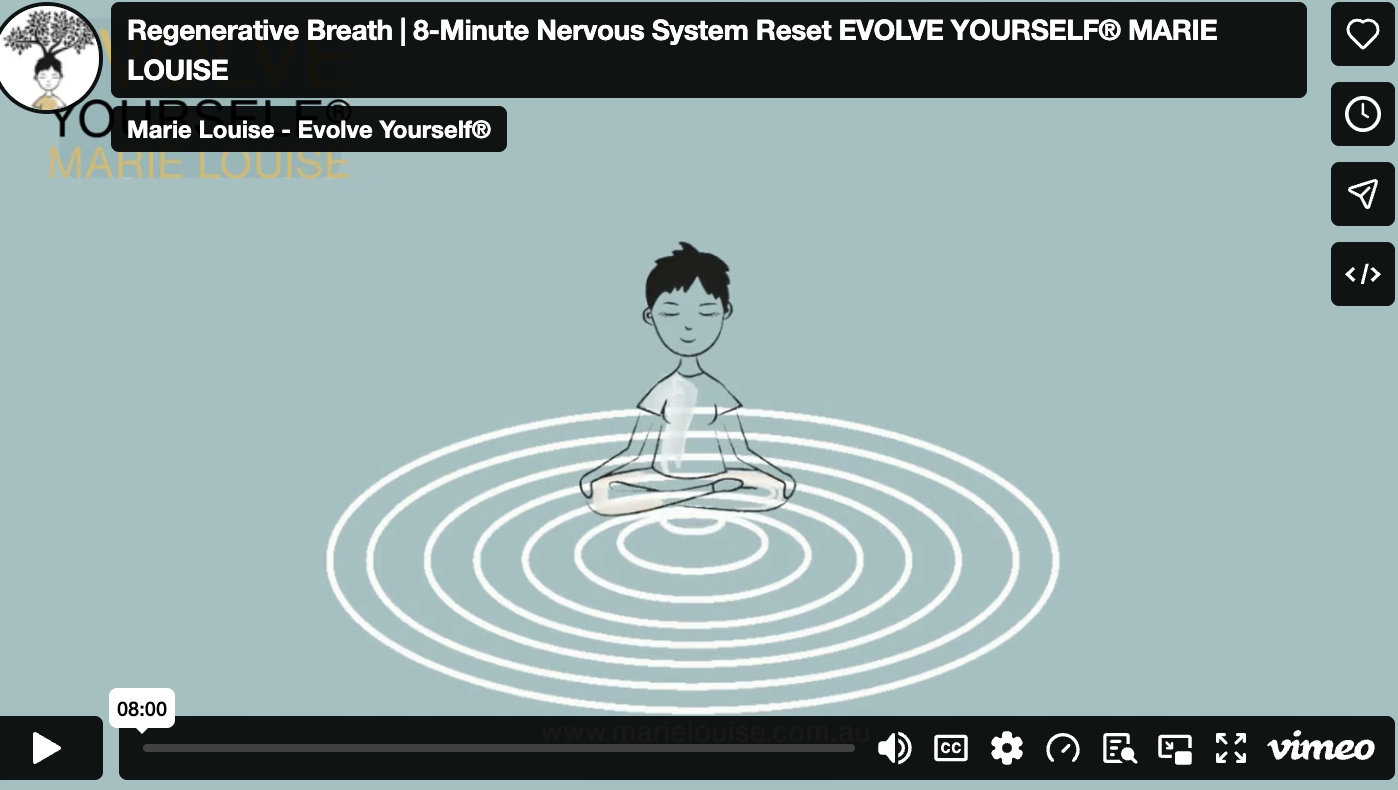
Regenerative Breath — 8-Minute Nervous System Reset
A gentle conscious breathing practice designed to settle the nervous system and create more space for rest, repair and regeneration.
Take 8 minutes to slow down, reconnect with your body and give your nervous system an opportunity to settle.
This guided conscious breathing practice uses a gentle, slow inhale and exhale through the nose — breathing so softly that you barely disturb the nasal hairs.
Slow, conscious breathing can support nervous-system regulation, heart-rate variability and the body's natural processes of rest and recovery.
I like to think of the breath as a remote control for the nervous system. We can't always control what's happening around us, but we can develop our capacity to consciously influence what's happening within us.
The quality of our breath influences the quality of our biology — and the quality of our biology influences how we experience life.
So take eight minutes.
Less effort. Slower breath. More space.
Allow your body the opportunity to move from survival towards repair, restoration and regeneration.
Marie Louise
Evolve Yourself®
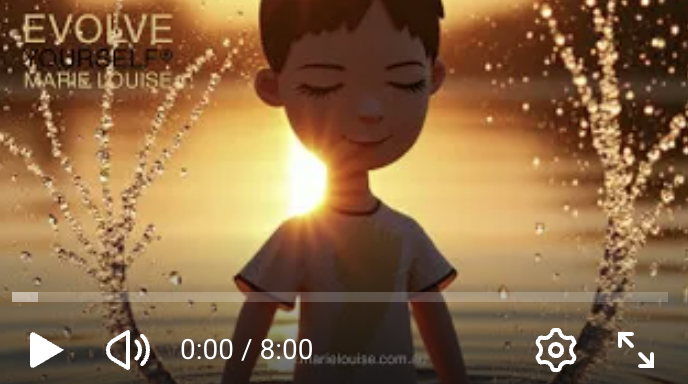
The Power of Body Awareness
Subtitle / Short Description:
An 8-minute guided body awareness practice using gentle squeeze-and-release movements to bring attention out of the thinking mind and into the body, supporting relaxation, presence and restful sleep.
Your body is receiving information from the world through you.
Long before the thinking mind has created a story about an experience, the nervous system and sensory systems and broader field of sensory perception, are already responding to signals: sound, movement, temperature, pressure, internal sensation, another person's presence, changes in the environment and countless other cues.
Much of this information never reaches conscious awareness. Filtered by the patterns of pre-condition.
Body awareness invites us to widen the field of what we can notice.
Instead of experiencing life predominantly through thought, we begin bringing awareness back to the whole organism — the breath, muscles, skin, heartbeat, sensations, subtle shifts and movements occurring within us. What awakens is what we could describe as gut feeling, intuitive knowing.
The body becomes more than something we carry around. It becomes an information receiver we can learn to listen to.
As awareness deepens, we may begin noticing information before we've automatically interpreted, labelled or built a story around it.
A sensation. A contraction. Warmth. Movement. Ease. An impulse. Something changing.
There is enormous intelligence in learning to stay with that raw energetic information before rushing to meaning.
This is one of the deeper gifts of body-awareness practice: not simply becoming more aware of the body, but developing a more intimate relationship with the whole organism through which we meet and experience life.
The more present we become, the more there is available to notice and perhaps, beneath all our interpretation, there is a much richer conversation happening all the time.
Practice invitation:
Feel first. Notice. Listen. Then interpret.
I Am Here
I Am Here embodied presence meditation by Marie Louise
An Embodied Presence Meditation with Marie Louise
What happens when we stop trying to silence thought and discover that attention can move?
I Am Here is an experiential meditation inviting you into the direct experience of essential attention to the body of skin. Bringing attention to breath, sensation and the living communication of the body-mind organism.
There is nothing to achieve and nowhere else to get to.
Thoughts may arise. Sensations may shift. The body may contract and release.
Rather than fighting what appears, we become curious about what is here.
One sensation. One feeling. One moment at a time.
An Invitation Into Presence
So much of our attention is continually moving towards what has been, what might happen next, what needs doing, what needs changing, or what our mind has decided deserves our attention.
Meditation gives us an opportunity to become curious about attention itself.
Not necessarily to stop thought.
Not to deny what we are feeling.
Not to force the body into a particular state.
But to notice.
What is happening in the body?
Where is attention?
What happens when attention moves towards sensation?
Can I notice contraction without immediately needing to change it?
Can I experience a breath without needing it to be different?
Can I become available to this moment as it is?
I am here.
I am open.
I am available in this moment.
Presence is not an idea to understand.
It is something we experience.
And perhaps, as we become increasingly available to the extraordinary experience of being human, more of the intelligence of life becomes available to move through and express as us.
Get Your Skin in the Game
Meditation is one of the experiential doorways within my wider exploration of human development, consciousness and the extraordinary human organism.
The invitation isn't simply to gather more information about ourselves, but to develop relationship with what we can directly experience; body, mind, emotions, nervous-system responses, energy, awareness and spirit.
Because you don't learn to drive a car by reading about it.
Your skin has to be in the game.
If you're curious to explore this inner landscape more deeply, Discover Worlds Within offers practical processes, activations and inquiry into the human sleeve and our capacity for greater awareness, self-governance, conscious creation and authentic expression.
Explore Discover Worlds Within →
#Presence #Attention #Embodiment #Consciousness

Skin Story
Woman in embodied movement exploring somatic awareness and the intelligence of the skin
The intelligence of the body as a living field
There is a layer of our experience that is continually communicating before we've found words for it, before we've explained what is happening, sometimes before thought has even caught up.
I think of it as our skin story.
The skin is usually understood as the boundary of the body, the place where me finishes and everything else begins. Physiologically, of course, it performs extraordinary functions in protecting us and sensing our environment, but experientially I find it far more interesting to consider the skin not only as a boundary, but as a meeting place, an interface.
The skin is not simply where we end. It is where trillions of bits of information waves connect.
Air moves across it. Temperature changes it. Touch communicates through it. We respond to proximity, environment, texture, another person's presence, the feeling of a room. There are sensations we notice immediately and countless subtleties that pass beneath our conscious attention until, for whatever reason, we bring awareness there and when we do, the experience of having a body can change quite dramatically.
Most of us have become extraordinarily practised at experiencing life through thought. We interpret, predict, analyse, remember, imagine and project, all of which are magnificent capacities of the human instrument. Yet there is also an enormous sensory world occurring alongside all of that, and sometimes our attention has simply become so accustomed to living elsewhere that we barely notice it. Bring attention to the skin now and something rather simple happens.
You notice.
Perhaps the air on your arms. The temperature around your face. Clothing touching your shoulders. A subtle tingling in your hands. Warmth. Coolness. Tightness. Softness. Nothing particularly dramatic at all, and yet you are suddenly here in a different way.
This is experiencing life.
Not feeling more for the sake of becoming exquisitely sensitive to everything, but returning to the language of the body and developing our capacity to listen to information that may otherwise be drowned out by the louder narratives of the mind. A brand a label a story. The skin story doesn't necessarily arrive in sentences.
It might be a tightening. A softening. A desire to move closer or create more space. Goosebumps.Warmth. Contraction. Expansion.
A subtle sense of aliveness that is difficult to explain but very easy to recognise once attention lands there.
We don't need to turn every sensation into a message from the universe, nor does every bodily response represent some infallible truth. Our sensations are influenced by physiology, history, nervous-system activity, expectation, conditioning, environment, memory and all manner of things moving through the organism. But they are still part of the conversation of experience and this is where awareness becomes useful, experiential and insightful.
Rather than allowing thought to automatically overrule the body, or swinging to the other extreme and making every sensation an unquestionable instruction, we can become curious about the information moving through the whole instrument.
Feeling for feeling sake. Can i stay with the feels before, I brand? Can i allow the breath and the habitat this is experience fully without running, avoiding or shaping it? Letting it move.
We begin to inhabit rather than merely observe ourselves.
For me, there is also an energetic dimension to this exploration. I experience the body not simply as physical matter but as participating within a living field of energy, relationship and consciousness. This is an experiential and spiritual lens within my work rather than something I need to reduce to a physiological explanation. There are moments when what we perceive through the body feels relational, energetic, intuitive or simply beyond the language we currently have for it.
I am comfortable leaving some mystery there. Because whether we describe an experience through sensation, nervous-system response, energetics, intuition or consciousness, the invitation remains remarkably grounded:
Can we actually feel what is happening?
This is where the skin becomes such a beautiful instrument of attention.
As awareness moves through the surface of the body, sensitivity can refine. We begin noticing subtleties we previously moved straight past. The difference between contraction and protection. Between openness and overexposure. Between the impulse to move and the habit of remaining still. Between a genuine yes, a reflexive yes, and the tiny bodily movement that may have been whispering no long before the mouth became involved.
Not because the skin gives us a magical truth detector, but because greater sensory awareness gives us more information with which to participate consciously and more information can create more choice.
This is where I experience sensitivity as a form of power. Not forceful power. Not the kind that imposes itself upon life.
Responsive power.
The capacity to remain receptive enough to notice what is happening while sovereign enough to choose how we meet it. To open when opening feels coherent, close when a boundary is needed, move when movement wants expression and remain still when stillness contains its own intelligence.
There is a feminine quality within this that I associate with Shakti—not feminine as synonymous with female, but as a way of speaking about the receptive, creative, moving intelligence of life.
Shakti, isn't merely an idea to understand. It points towards something that can be encountered through experience: life force in movement, creativity before it becomes form, sensation before we name it, the intelligence that can be felt when we stop trying to direct every moment from the mind and allow ourselves to receive as well as initiate and this is not the exclusive territory of the feminine. Receptivity without discernment can lose its centre just as direction without receptivity can become rigid. The dance is in the relationship—the capacity to receive and respond, feel and act, soften and hold, listen and direct.
The field of the the skin becomes one of the places where we can explore that dance directly. There is no philosophy required to feel the air touching your arms. No belief system necessary to notice whether you are holding your breath. No spiritual achievement required to become curious about the sensation moving across your chest or the impulse travelling through your hands.
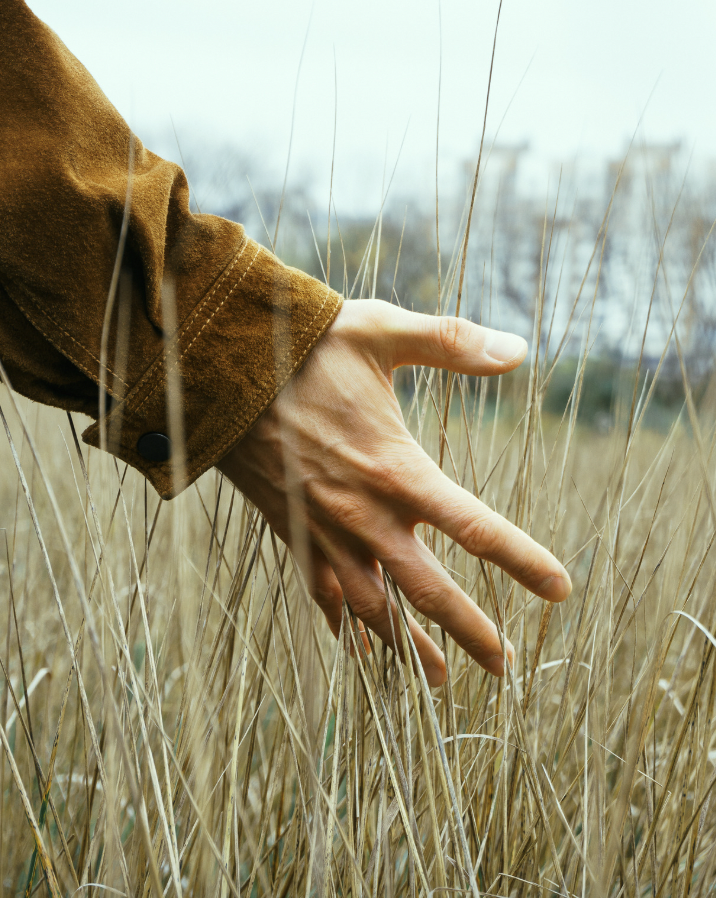
Your skin is already in the game. Perhaps what has been missing is our attention and as attention begins inhabiting the body more fully, something can shift in expression too. Movement can become less prescribed. Voice can emerge from somewhere deeper than performance. Creativity can become less about manufacturing something and more about giving form to what is already moving.
We begin discovering the difference between controlling the instrument and being in relationship with it.
That distinction has become increasingly important in my work because embodiment, to me, isn't simply noticing sensations. It is developing an intimate relationship with the whole organism through which we experience and express life—body, mind, emotion, nervous system, energy, awareness, spirit and consciousness all participating in the dance.
The skin is one doorway. A rather magnificent one, actually. It is physical and sensory, intimate and relational. It protects and receives. It delineates this particular body while simultaneously being the surface through which that body is continually encountering a world. Boundary and meeting place. Separation and relationship. Matter touched by environment, awareness touching matter, and perhaps this is why bringing awareness into the skin can sometimes carry a feeling far larger than the simplicity of the practice itself. We haven't suddenly become connected to life. We may simply be experiencing the connection that was already occurring. We have begun to inhabit it and from there, the skin story changes—not because we have written a better story over the top of the old one, but because we are finally listening to the living field in which the story is being told.

Full Moon Calibration: Awakening the Wild Feminine
Moon Body Calibration: The Dance of Water and Wildness
In the light of the Full Moon, we are invited to remember the wild intelligence that moves through our waters. This practice is a journey into embodiment — awakening the energetic body, regulating the nervous system, and opening the pathways to the womb: the source of our emotional, creative, and cosmic genius.
Through movement, sound, and stillness, we attune the inner tides to the lunar rhythm — where calibration becomes liberation, and the wild feminine reclaims her flow.
We’ve entered the Full Moon window, that luminous time when the moon mirrors our fullness, and her light invites us to meet our own.
The moon, that ancient feminine mirror, teaches us about rhythm, reflection, and release. She pulls at the oceans, she stirs the tides: Don’t kid yourself, as an expression of being, we are made of 72% water, she moves us too.
Over time, I’ve learned to attune to her cycles, through the body. Our vessel of communication.
Each phase invites a new dialogue with the body.
In the fullness, the energy peaks, illumination arrives, emotion heightens, and awareness opens.
Through years of diving inward, I discovered that the moon’s rhythm harmonises beautifully with the central nervous system, that exquisite instrument of calibration. When we soothe and tune our inner currents, we open pathways to an intelligence of the innate. This intelligence deeply calibrates with the womb, not just as a physical space, but as a portal of creation.
The womb holds memory, emotion, intuition, and deep creative potential. It is where the waters of the body and the waters of the cosmos meet, the cosmic patterning that births liberation through expression.
When the nervous system is calibrated in coherence, the womb moves through many shifts and activations. When the person chooses to develop the communication, realising its wakefullness is tangible.
When the womb is alive, our creative genius flows, raw, fluid, unapologetic.
She expresses the wild, fluid force of nature that the moon herself reflects. It is unique to all of us.
Through the cosmic patterning of planetary systems, we can invoke awareness of the qualities in which she opens. She is calling us to rise in that wildness, to let emotion be movement, to let creation be ceremony, and to trust that what flows through us is nature’s intelligence made visible.
So breathe with her light.
Move with her pull.
fiery, fierce, raw.
Let your inner waters dance, and let your own moon, your womb, your magic, be seen.
Mojo magic activated.

The Dance of Water and Wildness
A Moon Body Calibration Ritual
Moon Calibration Practice
1. Awaken the Wild:
Find a safe space that gives you permission to be free without judgement.
Begin by moving your body, freely, instinctively, without choreography or concern.
Let the Full Moon energy stir your primal self. Shake your limbs, roll your shoulders, stamp your feet.
Let sound rise from your belly — a roar, a sigh, a song — whatever wants to move through.
This is how we activate the energetic body, releasing tension and waking the life force that lives within the waters of your being. Let movement become medicine. Let sound out. Let the face move, the tongue move, anything goes here. Give yourself a good 15 min in this space.
2. Enter the Quiet:
Now, as your body softens, slow the movement.
Find stillness or a gentle sway, and feel the pulse that remains.
The dance has opened the channels; the breath now becomes the bridge.
1. Inhale through the nose for a count of four — let the breath travel down into the belly and pelvis.
2. Exhale through the mouth — releasing any remaining holding in the jaw, throat, or womb.
3. Let your breath find the same rhythm as the moon’s luminous tide.
3. Touch the Womb Space:
Place one or both hands on your lower belly.
Sense the warmth, the subtle hum beneath your palms.
Imagine a moon glowing here, silvery, fluid, alive.
Ask softly: What wants to move through me tonight?
Listen with the body, not the mind, let the answer ripple through your inner waters.
4. Express the Flow:
1. Whatever arises, give it form.
2. Write, hum, move, cry, or simply breathe it into being.
3. Trust that your expression — no matter how small or vast — is part of the moon’s own movement through you.
5. Close in Gratitude:
When you feel complete, place your hands over your heart and womb, and whisper a simple thank you —
to your body, to the moon, and to the rhythm that connects them.
#selfdiscovery #divinefeminine #consciousness
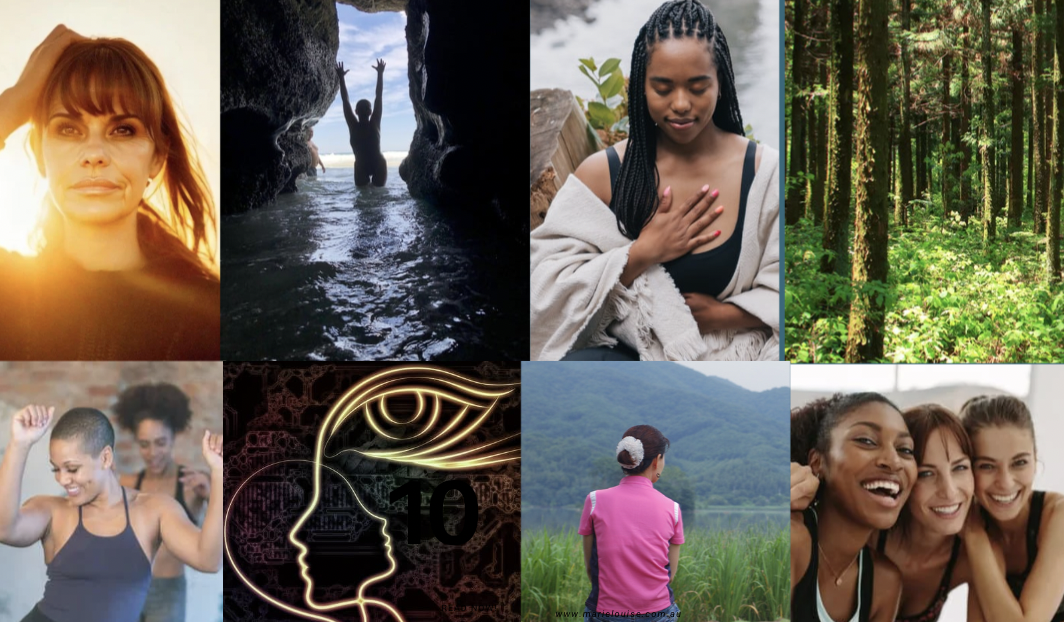
10 Keys in Self-leadership
"Unprocessed pain keeps us repeating cycles. Alchemised pain becomes power. This is the leadership the world is waiting for."
A field Guide in Feminine Force
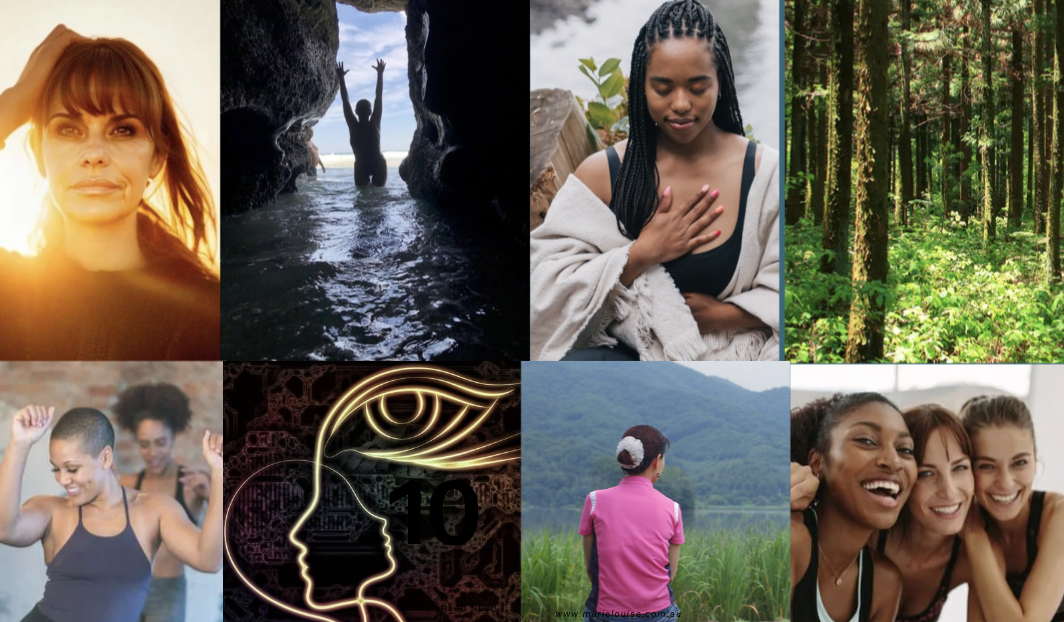
Leadership begins in the listening
Before we lead, we must listen. Not just to others—but to the ancient wisdom inside our bodies, hearts, and dreams.
Female leadership begins in the deep listening to our own voice. It is not built by performing louder in a noisy world—but by attuning to what is quiet and true within.
I believe the world doesn’t need more women in leadership who have hardened to survive. Survival is where history has played for long enough. It needs women who remember how to soften to lead from their wholeness.
🌿 A reflection on female leadership through the lens of self-discovery.
2. Awakening the wild is women's wealth
A woman in tune with her instinct is a force of nature. In a world that has taught us to polish, control, and edit ourselves into acceptability, reclaiming our wild knowing is an act of leadership. A ripple I believe is worthy of attention. The wild is not chaotic, it is deeply intelligent. We as females can often fall into the rabbit hole of burnout, because we have been operating from shoulds instead of soul. My work is about remembering: the very core by creating spaces that are safe to unlock our natural rhythms. Our leadership is not a mask. It’s a remembering of who we are. In retreat, we unmask.
We get wild.
We learn the art of process.
And in presence—we rise.
3. The power of receptivity
We hear a lot about “taking action” in leadership.
But feminine leadership begins with receiving.
Receiving insight.
Receiving stillness.
Receiving support.
It’s not passive, it’s powerful.
It allows a softening through the skin, the heart, and the head.
A sponge-like effect that says a full-bodied ‘YES’,
to new sensations, new insights, new ideas, new life.
And in that sponging… something miraculous happens, a magnet-like force begins to generate.
One that doesn’t chase, but draws in what is aligned, true, and ready.
This is the space where creativity gestates,
where innovation whispers,
and where alignment replaces effort.
The body of a woman knows how to receive.
True leadership is not just about the generosity of giving, .
It’s about how generously we allow ourselves to also receive.
Let’s learn the art of receiving ourselves. In all it’s colour. Join us
4. When the body speaks, wisdom in the flesh
The body doesn’t lie.
While the mind can be trained to perform, posture itself can reveal a truth you haven’t dared speak.
In our facilitation, we explore:
-The body as an anchor and portal.
-Our intimate relationship with the central nervous system and the subtle relationship with life..
-The mechanics of women's functioning as a gift and growth for self and all.
Biochemistry of flow in form
Embodied female leadership is not theoretical. It’s practiced through presence, breath, sensation, and the art of metabolising experience.
When life is engaged through full-body intelligence, the intellect of accumulation gives way to the innate intelligence; one that reveals the profound, the wise, and the true.
5. Self-care is a strategy of soul, not a spa day
Leadership requires stamina—and for women, that stamina is sustained through cycles.
Each month, a woman’s body moves through a physical shedding. A mechanical yet sacred process that allows for the release of emotional, psychological, and physical accumulation.
It is nature’s built-in reset, a rhythmic intelligence that clears space for clarity, creativity, and deeper connection.
And as a woman moves through the greater shift of change, menopause and
These transitions are metabolised with open arms, a portal opens. The monthly cycles fall away, and a sovereign wholeness begins to express through her physicality and presence. It is the maturity and gift of age.
The feminine operates in rhythm.
To ignore that rhythm is to burn out, to go against the innate intelligence of the system.
So what if…
-Rest, digest, and release are strategic.
-Saying no is a powerful way of saying yes—to coherence.
-Pleasure recalibrates and elevates both performance and process.
Self-care is not indulgent plus add it’s intelligent doorway to more of ourselves and the world.
It’s how women leaders process and elevate their energy, preserve and refine their clarity, and pulse in the power of freedom and flow. Exploring in the skin is what we do in adventure, retreat and inter-revolutionary processes.
6. Lead in wholeness not wounds
We have been shaped by life happenings. The good, the bad and the ugly. Traumatic moments are great doorways to more of ourselves. These moments activate things like, silencing, or self-doubt.
That pain can indeed become fuel, but not when we lead from it unconsciously. Our wounds can be portals to our greatest strengths, yet only when we’ve given them space to be felt, understood, and metabolised. When pain remains unprocessed, it quietly steers the ship, often recreating more of the same cycles within ourselves and our culture, we long to break.
The real gift is in learning how to transform that pain and feed our purposeful life, while still honouring the journey it took to get here. This is not about erasing the past but integrating it so deeply that it becomes the very foundation of our fullest expression.
We don’t need perfect leaders. We need integrated ones, women who are choosing to discover how to alchemise their stories and now serve from a place of embodied wisdom.
Our retreats are spaces where this process becomes possible, not as a therapy, but a restoration of sovereignty, where our wholeness is our compass
7. Intuition is intelligence
We don’t always need another opinion.
What we truly need is to re-establish trust with our own knowing.
Intuition is not mystical fluff—it’s a biological, emotional, and spiritual intelligence system. It’s the wholesome interpretation of all information, not just what the mind can compute. or collate
I often think of intuition as “into-it-I-see.” The mind will filter through historic patterning, scanning for the quickest route based on past data. But our full system: gut, heart, and head can interpret information from the state of nowness, in the isness. This opens the door to higher, deeper, fuller-spectrum frequencies from which to shape our decisions.
Energetically, this means accessing the entire bandwidth of available information. Yet, it isn’t always easy. The reflex is to default to what we’ve known before, or to react from the conditions of our personal and collective experiences. This exploration is about ingesting and staying here fully and long enough for clarity to reveal itself.
Women are naturally intuitive as our body mechanically has reflexed the emotional body well, but many have been trained out of trusting it.
In leadership, intuitive precision creates impact.
Trusting our gut, heart, head in coherence is not unprofessional. It’s unfakeable
8. Sacred Boundaries Make space for genius.
Boundaries are not walls.
They are sacred agreements with ourselves. vows that honour the deepest processes of our creation.
As women rise into leadership, there is often an ancient reflex woven into our very skin: the habit of feeding everyone else, holding everything together, doing it all… while quietly abandoning our own needs.
When we emotionally and psychologically mature, something shifts.
-We reclaim the right to discern; what serves the whole and what harms it, what we will tolerate and what no longer belongs in the way we dance with the world.
A boundary is not rigid stone; it is a living guidance system. It moves with time and wisdom. Yet, as we dismantle old behaviours, learning to play a different edge gives us a new space of sovereignty—where the inner compass becomes the navigator, not the survival patterns of yesterday.
Burnout begins where boundaries end.
The feminine thrives inside containers. We are the vessels of creation, the sacred bowls where vision is held, nurtured, and birthed.
In retreat, we explore our edges and stretch them. We build new structures that are spacious enough to hold our freedom, strong enough to keep us safe.
9. The feminine Field is where creation thrives.
One of the deepest wounds many of us carry is the belief that there’s not enough space for all of us to rise. That if someone else is shining, it somehow dims our own light. But the feminine field doesn’t work like that.
It isn’t rooted in scarcity, it’s woven from the ever-changing, life-giving fabric of connection, movement, raw and honest expression. It’s the fertile ground where ideas spark, relationships form, dreams are born, and visions come to life.
We, as women, have a direct physiological connection to this field. That is the gift of being born in what I call the skinsuit of a woman. Nothing to do with gender, but the basic mechanics of the system.
When we explore it, when we learn to trust and harness it, we start loosening our grip on old systems that never really fit us. Systems that are outdated and out of tune with our true nature.
This is when we open the door to a new way of seeing, a new way of being.
This is the shift from playing by the rules of the old game to rewriting the game entirely. Supporting growth, connection, and the full expression of our gifts.
It’s the moment we stop living in cycles of dissonance and instead come home to resonance.
The spaces we create are for women to witness each other, lift each other, and rise together
10. Unfolding opens the voice of resonance
As we lean into our curiosity and untangle the threads of limitation, something truer emerges.
This is where aligned living begins.
Where the feminine vibration doesn’t perform for the world,
but becomes the sound of life itself, a resonance felt, not just heard. It’s a place where many qualities are born.
In this space, every ripple is perfect for the moment.
Imagine if we all attuned to this fluidity.
Imagine knowing, deeply, that the force of nature holds us,
cradled in the womb of consciousness.
Here, voice is not just sound.
It is silence, listening, playing.
Not passive. Not receding.
But unapologetically alive.
We explore the full range of frequency and sound expressed through our body/mind organism.
She sits in silence… as the world spins its noise.
And in that stillness, she remembers —
Her power in process
She learns to untangle the stories…
the ones that wrapped around her body,
threads coiled tightly, like a snake awaiting the sun.
Each thread she loosens,
a truth returns—
wild, raw, and freshhh.
Breath becomes her bridge.
With each inhale, she receives.
With each exhale, she gives.
Life dances in her lungs,
reminding her she is already whole.
Her voice awakens .
Not sharp, not soft, but sovereign.
She speaks not to fill the air,
but to create.
Words that carry the victorious pulse of being alive.
And in the rhythm her body moves,
she discovers the wilderness ,
the mystery of the muse,
the freedom of imperfection.
This is not a performance.
This is not a role.
This… is
HOME - Marie Louise

What happens inside
Marie Louise explores the inner terrain of the human sleeve — body, mind, emotions, nervous system, energetics, spirit and consciousness — and how inner awareness becomes lived and collective expression.
The inner terrain of human development
What happens when we turn the lens inward?
Not to escape the world, become endlessly preoccupied with ourselves, or disappear into another round of self-improvement, but to genuinely meet the one who is moving through it.
There is an extraordinary terrain within us. Body, mind, emotion, nervous system, memory, conditioning, breath, energetics, spirit, consciousness—all participating in the particular experience we call me. Some dimensions we can observe and describe quite clearly; others are known more intimately through sensation, intuition, energetic movement or those experiences for which language always seems to arrive slightly late.
This is the territory I continue to find fascinating because the more intimately we know the instrument, the more visible its organisation becomes. The terrains become wider, the true nature opens and maturity rises in all dimensions of experience.
We begin noticing what tightens before we say no while our mouth is still preparing to say yes. We hear the old belief hiding inside a perfectly reasonable explanation. We feel the emotional momentum gathering before it becomes the familiar reaction. We discover that the annoying trait we've spent years trying to eradicate may contain intelligence, protection, desire, creativity or some beautiful quality that simply hasn't yet found a coherent way to express itself.
Turning inward doesn't necessarily give us tidy answers. Sometimes it gives us a better relationship with the question and perhaps this is where wholebeing change begins—not by controlling everything happening around us, but by developing greater relationship and coherence across what is happening within us.
The mind doesn't have to lose its place for the body to be heard. The nervous system doesn't need to become permanently calm. Emotion doesn't need to be managed into acceptability. Spiritual inquiry doesn't require us to transcend our humanity, and our energetic experience doesn't need to be stripped of mystery simply because we cannot always explain it.
It can all belong. This is what I mean when I speak about the human sleeve. The physical, emotional, mental, energetic and spiritual dimensions of our experience are not separate little departments waiting to be individually optimised. They continually participate in one another, sometimes harmoniously and sometimes with delicious amounts of dissonance.
Our development, then, becomes less about perfecting the sleeve and more about becoming intimate enough with it that we can recognise what is moving through us.
What am I feeling? What am I believing? What is my body communicating? What is historical here and what belongs to this moment? Where is there contraction, charge, movement or vitality? What happens if I stay rather than immediately fix, explain or escape? What else becomes available when awareness enters the experience?
This kind of inward attention isn't withdrawal from life. Quite the opposite.
Because eventually we have to take our skin back into the game. What we discover inwardly finds its expression through how we speak, love, create, parent, lead, work, touch, choose, respond and meet another human being. A little more awareness inside can mean a little less unconscious projection outside. A quality we've previously suppressed may become available to our creativity. A familiar emotional charge can be met before its momentum automatically becomes yesterday's behaviour. The subjective begins to become relational and the relational participates in the collective.
This is one of the places where my understanding of the inner and outer worlds meets. Personal development isn’t an entirely private affair. We are shaped through relationship, culture, environment and collective patterns, and the way we subsequently express ourselves enters those environments in return.
Our inner organisation has consequences. Not because every thought magically changes the universe, but because we are participants. Our attention, choices, behaviours, energetic tone, creativity, presence and ways of relating become part of what another human being encounters. They enter families, rooms, relationships, workplaces and communities. What is embodied doesn't stop neatly at the skin. Perhaps this is one way the inner shapes the collective—not through bypassing the world in favour of ourselves, but by recognising that we are one of the places through which the world is continually being made.
So yes, zoom in.
Get curious about the contraction. Listen to the breath. Meet the irritating part. Feel the energy before attaching the old story. Notice what you've been calling a flaw and ask whether something else might be buried inside it. Let the mind understand and the body experience. Let awareness reach into the places you've habitually overridden. Let spirit belong alongside skin. Not because the inward journey is the destination. Because the more of ourselves we can consciously inhabit, the more of ourselves becomes available for expression and perhaps that is the shift. Not a higher frequency of attainment. A more coherent frequency of being—one that can actually make its way through the human sleeve and into the life we're here to live.
Zoom in.
There may be far more of you here than you've been available to meet.

The Pulse Beneath It All
Marie Louise explores feminine and masculine energetics, Shakti, life force, receptivity and direction as complementary qualities within creativity, embodiment and human expression.
Feminine intelligence, life force and the dance of creation
There is a pulse beneath so much of what we do. Before the project has a name, before the idea becomes a plan, before something is organised, produced or offered to the world, there is often a movement—a flicker of desire, an impulse, an image, a sensation, something stirring in the body that says there is life here.
I am interested in that movement.
Within the language of energetics, one way I explore it is through the qualities we have traditionally called feminine and masculine. Not female and male, and certainly not a prescription for how women and men should behave, but different energetic qualities through which life can move and take form. The feminine, speaks to receptivity, sensation, creativity, intuition, movement, relationship, gestation, wildness, sensuality and the capacity to receive what has not yet become fully formed. There is potency in that and I think we've sometimes mistaken receptivity for passivity because we have become so accustomed to measuring power by what is visible: action, productivity, direction, speed, output, control.
Yet anyone who has sat with an idea before it is ready, created something from nothing, listened deeply to the body, made art, birthed a project, moved with desire or remained present to an experience without immediately trying to fix it knows that receptivity can be an extraordinarily active state. Something is happening. Something is gathering.Something is becoming.
Within Tantric traditions, Shakti offers a beautiful spiritual language for this; the dynamic, creative movement of life, consciousness in expression, energy taking form. I don't need that language to become a scientific explanation for what we experience. I value it as a spiritual and experiential lens through which we can explore our relationship with life force, creativity and the movement of energy through the human instrument. and yet the feminine doesn't exist in isolation.
This is where my relationship with the masculine has also become more interesting. The masculine, in its coherent expression, can bring direction, discernment, containment, presence, clarity and structure. Not domination of the wild, but enough presence for the wild to move without losing itself. Its where stillness meets movement. Direction meets receptivity. Structure meets creative process and conscious attention meets the pulse of life.
When these qualities are in relationship rather than opposition, something beautiful can happen. What is felt can find expression. What is imagined can find structure. What is received can be acted upon. The creative impulse can travel from the unseen into form. This is where the dance becomes far more interesting, than trying to decide whether we need “more feminine” or “more masculine.”
We need relationship between them and that relationship will not look identical in every human being.
Our histories, bodies, conditioning, environments, cultures, relationships and individual nature all participate in how these qualities have been developed, suppressed, distorted or expressed. Some of us have become magnificent at doing and almost frightened of receiving. Others can feel enormous creative possibility but struggle to give it enough structure to enter the world. We may know how to hold everything together while having forgotten how to move spontaneously, or become so identified with freedom that commitment itself feels like confinement.
This is why I prefer to speak about dissonance and harmonisation rather than deciding one quality is good and another bad. The question becomes: How are these energies actually moving through me? Not how feminine should I be. Not how masculine should I be, but what is asking for greater relationship of coherence here?
I find this particularly alive when we look at the systems we participate in. Many of our workplaces, financial structures and ideas about success have rewarded qualities such as speed, productivity, linearity and constant output. Those qualities are not inherently problematic. Direction and action can be wonderful. The dissonance appears when one way of functioning becomes so dominant that other forms of intelligence have little room to participate. A system that knows how to produce but not how to pause. A leader who knows how to direct but not receive.A human being who can achieve but cannot feel when enough is enough.A creative person overflowing with ideas but unable to give any of them form.
The answer isn't to throw out structure and all go dancing barefoot through the forest—although I'm certainly not opposed to the occasional barefoot dance. It is to become more sensitive to the whole instrument. Can we recognise when direction has become force? Can we feel when receptivity has become collapse? Can we distinguish stillness from avoidance, surrender from giving ourselves away, structure from control, wildness from reactivity?
This is where energetic language becomes useful only when we bring it back into lived experience.
We can feel these qualities. There are moments when the body wants to soften and receive, and others when something very clear wants to move forward. There are times when an idea needs spaciousness and times when it needs a deadline. Sometimes the most loving thing we can do is open. Sometimes it is to close the bloody door.
This is the intelligence of relationship and somewhere within it sits our relationship with sexual energy, which I experience as belonging to a much larger conversation than sex itself.
Sexual energy can be explored as life force—the current of vitality, desire, creativity and aliveness moving through the body. It may express sexually, but it can also move into art, work, movement, relationship, creativity, voice and the simple pleasure of being vividly alive inside our own skin. Rather than making this energy something taboo, performative or something we must immediately discharge, we can become curious about it. What does vitality actually feel like in my body? Where does desire move? What happens if I breathe with that energy rather than immediately directing it somewhere? Does it want movement? Expression? Creation? Connection? Stillness?
There is something deeply developmental about learning to remain present with our own aliveness and perhaps this is part of reclaiming the feminine—not reclaiming femininity as an identity we must perform, but restoring relationship with receptivity, sensation, creativity and the living currents we may have learned to override The feminine does not need to defeat the masculine to become free. Nor does the masculine need to contain the feminine into submission. Their coherent expression can become a dance through which something uniquely ours comes into form.
Our own divine blueprint, if you like—not as a predetermined script we need to discover and perform perfectly, but as the particular configuration through which life, consciousness, body, history, energy, creativity and spirit meet and become expression and there is no universal ratio.
The invitation is to listen.
Five Doorways Into the Dance
These aren't prescriptions or another five things to squeeze onto the self-development list. They are simply ways of getting curious about how these qualities are moving through your own instrument.
1. Come back into the body.
Feel your feet. Notice gravity. Bring attention into the skin, breath, belly and chest. Before deciding what you need, notice what is actually happening. The body gives us somewhere tangible to begin.
2. Become curious about your life force.
Notice vitality, desire and sexual energy without immediately making them mean something or directing them towards an outcome. How does aliveness move through you? What nourishes it? What contracts it? Where might that energy want expression beyond the sexual?
3. Let movement move you.
Walk, shake, dance, breathe, make sound, stretch, become still. Rather than always telling the body how to move, occasionally listen for movement from within and see what happens when the instrument is allowed to participate in the conversation.
4. Explore receptivity and direction.
Where are you forcing something that might need space? Where are you waiting for something that might need action? Notice whether the moment is asking you to receive, initiate, soften, structure, open, discern, surrender or hold.
5. Follow what feels alive—with awareness.
Curiosity can become a compass without every impulse becoming an instruction. Feel what has energy. Stay with it. Give it attention. Let consciousness participate. Then notice what wants to become expression.
Perhaps this is the pulse beneath it all. Life moving towards life. Energy meeting awareness. Receptivity meeting direction. The unseen gathering itself towards form.
We don't need to become more feminine or more masculine according to somebody else's idea of what those words mean. We can become increasingly intimate with how these qualities live within us, where they have become dissonant and what becomes possible as they begin to harmonise.
Then creation becomes less about forcing life into the shape we have already decided upon.
We listen. We meet it. We participate and we allow the particular intelligence moving through this human instrument to find its own way into form.

Radically falling in love: Self-Love, Self-Care, and Self-Pleasure
"This Love Day, crack open the vessel of your true self and embrace the power of self-love, self-care, and self-pleasure. In this heartfelt exploration, discover how the journey through age, transformation, and life's pivotal stages—like motherhood and menopause—unfolds new depths of wisdom and vitality. Learn how shedding old beliefs about shame and disconnection can unlock your body’s innate capacity for joy, creativity, and pleasure. Explore the powerful connection between self-pleasure, hormonal balance, and emotional healing, and how embracing your body’s sensual energy can bring liberation and empowerment. Through practices like yin yoga, dancing, and conscious self-pleasure, you’ll tap into a wellspring of vitality that enriches not only your body but your entire life. This post is a call to honor and explore your feminine energy, reconnect with your body, and celebrate the fullness of your being—no matter your age. Reclaim your power, joy, and vitality this Love Day and beyond!
Falling in love and unfolding in the whole self has been a lifelong journey, and as I navigate my late 50s, I’m continuously in awe of the depth that this process reveals. There’s an innate wisdom that activates in the skin, the mind, and the spirit as we grow older, especially when we begin to peel back the layers of conditioning, like embedded guilt and shame. Lifes’ stages bring forth different qualities, and each one invites us to meet ourselves anew.
I remember being 20 years old and pregnant, unsure and totally insecure as to how I would ever be ready to be a mother. I didn’t know what I was doing with my own life, let alone to care for another. But, shazam, as if by some magic, my body/mind shifted, potent chemistry took place, activations within the system unfolded and a maturation in motherhood emerged. It wasn't to say perfection in being a mother, but this miraculous process gave the capacity to give motherhood a good crack. There were certain qualities that awoke in this mosh of chemistry and awareness. The same can be said of menopause and any major transitions that move us into different phases of life. I have discovered there are specific activations that come alive in the skin of a woman in these pivotal processes- a womb magic, if you will. The experience that unfolds is something that when we approach ourselves with curiosity and awareness, we allow conditioned patterns to fall away and new pathways to emerge, the new, spontaneous and authentic expression can show itself. Unique to the vessel called you.
Yet, for so long, ageing in the Women's sleeve has had a bad rap. We’ve masked our menstrual cycles with drugs, ignored the blessing of bleeding, disconnected from the transformative process of menopause, while neglecting the potential wisdom that resides within these experiences. I spent decades hating how I looked and acted—too wrinkly, too fat, too loud. My body never seemed to fit the mould I believed I was supposed to fit. It was always too much or not enough. This mindset of lack, fueled by a fear of my own power, conditioned me to reject the essential beauty that lay within us all.
But now, I’m discovering the power of my own juices, my own flow—an embodied wisdom that ignites from truly embracing every aspect of myself, the good, the bad, the ugly. The more I get real with this crackin vessel I call Marie Louise, the more I realise the capacity for joy, creativity, and vibrancy is something that can be cultivated. This is the gift of exploring self-love and self-care, initiated through self-pleasure. And it’s a gift that can awaken at any age, but in my view, gets better with age, especially when we’re willing to explore it with open eyes and an open heart.
As women, our bodies are vessels of creation, not just biologically, but in every sense of the word. Our wombs hold immense creative potential, yet we’re taught to reject, hide, and disconnect from them. We’re conditioned to see bleeding as gross, our tummies as unattractive, and our vaginas as something that must be "fixed" or reshaped to fit an ideal. The manifestation of illness in the sexual organs shows the momentum of such imbalance within the collective. But what if we reframe these beliefs? What if, instead of annihilating our bodies with judgement, distaste and criticism, we learn to honour them as divine in process and radically fall in love?
For me, the process of age and the pathway through menopause has been a time of profound awakening. It has required me to get raw and real with myself, to let go of opinions, self-abuse, and to embrace radical self-love. It’s been a journey of feeling fully—embracing the fire, the rage,the shame, the gifts, the joy, the ecstasy, and everything in between. In the process of age, I’ve had to face my many masks of dissonance and history of trauma, which was wrapped up in denial and avoidance. I was abused throughout my childhood and for years, my body operated on survival mode. I then unconsciously became my worst abuser. I numbed myself, avoided my sensations, and fundamentally disconnected from my own pleasure.
The experience of abuse shaped a deep subjective, societal condition of oppression and suppression within my body/mind expression, and it took conscious attention to recognise and address the shadows and potential gifts that lay within the skin. These tendencies had once served my body during traumatic times, helping me to survive. However, they no longer served my system in the pursuit of living a full, vibrant, soulful life. The recognition of my addiction to fear in all its forms, constructed walls or weights of limitation. This required immense courage to confront these walls I had unconsciously built in the skinsuit of conditioning—a limitation from the fabulous force of feminine energy. I had to unlearn and relearn. I had to learn how to receive without expectation, and how to give unconditionally. For years, I had fortified myself with mechanisms that protected me, but ultimately hinder my growth. These survival reflexes needed to be cracked open, unlearned, so that I could expand and truly experience life in all its richness, colours and flavours……. I recognise these patterns are not exclusive to the abused, they lay deeply in the collective consciousness in which we all marinate, this imbalance shows itself in dis-ease and dysfunction for all masculine and feminine expressions.
What has self pleasure to do with it?
As I’ve worked through the somatic layers of trauma and condition while inviting the gift of process, I’ve uncovered new pathways of intimacy with myself. I’ve learned that self-pleasure is not just about physical satisfaction—it’s about reclaiming joy, vitality, and life force. When we activate self-pleasure with intention, we cultivate powerful biochemical shifts that nourish our bodies, heal our wounds, and restore our vibrancy. We become our own chemists, creating the medicine our systems need. No matter what stage of life we are in, on the woman's pathway, calibration of harmonics in the system, allows for the balance of hormones and biochemical patterns to optimise its innate intelligence. Getting connected opens the door.
For many of us, self-pleasure comes with a history of shame. We’re taught that it’s wrong, dirty, or indulgent. But what if we saw it for what it truly is—a natural, healthy expression of learning about our creative energy? When we embrace our sexual energy as women, we tap into a well of longevity, creativity, magnetism, and wellness. This pool and portal has the most transformative effects on the body…….This energy is infinite—and the cool thing is, it only grows the more we engage with it.
In my own life, exploring the intimacy of my whole self has been supported by the act of exploring pleasure, presence and play. I’ve had to break free from the patterns of dissociation that once ruled my bedroom and my life. By reconnecting with the sensations in my body—particularly in my vagina—I’ve become more sensitive, more alive, and more aware in every area of my life. I’ve learned that the masks I wore in the world were a reflection of the disconnection I felt within myself. As I re-sensitised to my body, I re-sensitised to life.
In this pathway of self-discovery, one of the habits of history I had to confront, was the suboptimal automated patterns of thrusting and performance I had adopted in the sexual arena.The distorted understanding on what sex should look like, comes from many places, beliefs childhood, media, movies and embedded cultural patterns in the consciousness of the collective. These patterns supported a numbing effect in the vaginal wall, cutting me off from the fullness of sensations and intimacy that were possible. Becoming sensitive to the subtlety of these sensations required a process of unlearning and learning to fire and wire, not just my attention, but also the electrical currents of life force within my body in awareness. I saw how my reflexes that worked when I was young were still in operation, my distaste of my body was still playing out, my body was like a well oiled machine of automated responses that no longer served its growth. The exploration for something new became an intentional practice of being present to these sensations, facing fears, feeling fully and allowing more of life to be felt and experienced.
The more awareness I brought to the subtle regions of the vaginal canal, the more sensitive I became to the life force that was awakening throughout my whole body. Old clusters of cortisol and adrenaline released in the process of allowing energy to move through the body untethered. No judgement, no holding on, just allowance and receivership. This process not only heightened physical sensations, but also unlocked gifts and insights, awakening a deeper connection to wholeSELF in life. I came to recognise that the numbing actions I had previously relied on were not supportive of the full, ecstatic experience of being alive in my whole skin. Through this sensitivity, a new level of awareness emerged. There is literally an opening of the womb, the mind and heart, a coherence of expression that cultivates more life force Allowing for a richer, more vibrant, and intimate connection to both myself and the world around me.
How does shame affect our ability to receive?
A vessel that operates under the weight of shame cannot fully experience joy. Shame’s somatic embodiment closes the beauty of all lifes’ qualities. Shame shuts all functions of psychological, emotional and physical growth down. Our mind cannot be open to new mechanics or information and that shutdown acts like a numbing agent. When we learn to lean into the shame sensations, a portal of awareness can open the body up. The momentum of its energy acts like a flush through the system, when felt, exposing the gift of process. We also have the capacity to support the shift of shame by consciously cultivating joy. Self-pleasure is one powerful pathway to do this. When we give ourselves permission to experience pleasure, we activate the chemistry of joy in our bodies, the energy of ecstasy acts like a high pressure cleaner, washing away and purifying debris that was once embedded in the skin. This byproduct of pleasure has profound ripple effects on our immune system, health, relationships, and the world around us.
This journey of self-love and self-care is not just about the individual—it’s about the collective. We live in a world that has oppressed and shamed the sexual, the ecstatic, and the aged. To shift this dynamic, we can take responsibility for ourselves, creating the sovereignty and self governance necessary to ripple these new patterns within the ecosystem of our relative life. Choosing to embrace radical self-love as a pathway to healing, health and happiness, cultivates a reverberation in the field in which we live, effecting the consciousness of the society at large. Who wouldn’t want more love in the world.?
This is a journey of falling in love with the whole self—the good, the bad, the light, the dark. When we stop rejecting parts of ourselves, we allow our full expression to emerge. By embracing the erotic energy within our bodies, we tap into a portal of dynamic, vibrant life force. We reclaim our power, not just as sensitive beings, but as creators, healers, and leaders. Exposing our unique gifts in the world of creation.
This courageous attention is something I believe would benefit us all, no matter what age you are. It is where we become aware where we are operating on autopilot and where we can become more sensitive to the presence of life itself. This is where we choose to let go of limiting reflexes. Can it be challenging? Does it take effort? Can it be uncomfortable? Yes yes and yes. Is it worth it? Is it liberating? Does it juice up your life in more ways than you could imagine? Yes yes yes. We all carry survival tendencies, often unconscious, and to shift from merely surviving to thriving, it requires learning to look at the shadows of our personas, lean into our gifts and dance with the electricity of life at this moment . Presence to the juices of life isn’t just a state of mind—it’s a state of being, where we can feel, touch, and embody the friggin awesomeness of being alive in this moment rather than simply existing in it. The act of self-pleasure is an act of radical self-love allowing walls that once served us to dismantle and crumble. In exploring intimacy with ourselves, we uncover the potential for a more ecstatic, alive, and connected existence. In my view, this is our birthright.
This is an invitation to be curious about your body, your wildness, your own life force, and to give yourself the space to explore what truly lives within you. In doing so, you may crack open your experience in freedom, joy, and vitality that have been waiting for you all along. Let the wisdom of age awaken and bear its fruits of truly living in what has essentially been here all along.
Dive in and Cultivate Your Ecstatic Life
Become aware of your body. Engage in practices that ground you in your skin and awaken your senses. Feel, feel and feel again.
Do yin yoga—the art of receiving and allowing. Yin yoga encourages a softening of the body, engagement of breath, releasing tension and welcoming a deep, somatic process of allowance.
Dance, dance, and dance again. Move your body with joy and abandon self criticism and judgement. Dance is a pathway to liberation and release, a way to shake off old energies and invite in the new in form.
Fuel your life with joyful experiences. Surround yourself with what brings you joy and beauty, whether it’s music, art, movement, or time spent with loved ones. If you don't know what that is. Small steps of stepping into that which makes you smile can guide your pathway of inspired action.
Get amongst the water. Water is fluid and deeply connected to emotion. Let it move, morph, cleanse, and clarify your body and soul.
Do inner child and mirror work. These practices help you reconnect with parts of yourself that need nurturing, forgiveness, and love. Learn what it means to lean into your shadow - this is a doorway to shine.
Masturbate and practice presence. When self-pleasuring, bring your full awareness to the experience. Tune in to the sensations and be fully present, cultivating a deeper relationship with your body. Become curious about being soft and sensual to the vaginal wall, explore the clitoris with awareness and breath, practice saying ‘yes’ to yourself. When you give yourself excuses if you don't have enough time etc. Give yourself a smile and do it anyway.
When you are in the bedroom with a partner, notice when you slip into autopilot. Invite a new kind of dance—one that requires presence, curiosity, and intentional touch. Get curious and exploitative about the other and yourself.
Watch the words you say to yourself. Be mindful of your internal dialogue. Notice any negative self-talk and challenge it with compassion, love and understanding. Build your affirmation list and feel it as though it’s true.
Recognise your darker self-talk. Write it down. Sit with it. Instead of pushing these thoughts away, feel and ask what it wants from you, begin to fall in love with these parts of yourself—they are often the portals of your gifts to experience more of life..
Laugh, laugh, and laugh again. Laughter is medicine. Allow yourself to laugh freely and often, even at yourself. Celebrate yourself, play with the practice of laughing for no reason. Feel your body shift.
Do your inner work. Connect with your emotions, especially the ones that are raw—rage, wildness, grief. We have suppressed so much of ourselves, especially the emotions society deems unacceptable. Create environments where you can safely explore and express all that you feel—this invites more depth and arousal into your life. Create a safe space where you can express and release them. Whether it's through movement, breathwork, or primal screams, allow yourself to feel fully.
Take on a conscious breath practice: There are many techniques that support release and allow for whole body/mind awareness. These techniques are powerful and support the central nervous system reboot, rewire and recalibrate. Inviting new ways of playing in the world
By leaning into these practices, you cultivate a deeper love for yourself, one that nourishes your body, mind, and spirit. This is the foundation of living an ecstatic, joyful, and embodied life.

From Survival to Sovereignty
Marie Louise reflects on surviving sexual violence, integration, embodied sovereignty and feminine energetics, exploring the relationship between personal transformation and collective change.
Violence, integration and the reclamation of our whole selves
The 16 Days of Activism against Gender-Based Violence, held each year from 25 November to 10 December, brings violence against women and girls into collective focus and calls for prevention, accountability, advocacy and systemic change.
And the need remains profound. Violence against women is not simply an individual problem to be healed behind closed doors; it is a human-rights, public-health and gender-equality issue, shaped through interacting individual, relational, community and societal factors. I also meet this conversation personally.
I write as a woman who experienced childhood sexual abuse and rape, and as someone who has spent many years exploring what happens after violence enters the human organism. Because the act may end while its imprint continues to move.
It can move through the body, through relationships, sexuality, self-perception, nervous-system responses, voice, boundaries and the subtle ways we organise ourselves around what has happened. It can appear in what we avoid, what we tolerate, how much space we allow ourselves to occupy and what the body has learned to anticipate. My own responses included denial, avoidance, shutting down and the strange intelligence of simply getting on with life. These weren't character flaws. Looking back, I can see ways my organism learned to navigate experiences for which I did not yet have the resources, understanding or power to fully process. But survival strategies can continue long after the original environment has changed.
For me there eventually came a point when what had been contained—rage, shame, fear, grief and all the energy wrapped around them—could no longer remain neatly packed away and strangely, what initially felt like an implosion became an opening. Not because the violence had somehow been a gift. I want to be very clear about that distinction. We don't need to spiritualise violence or make suffering necessary in order to find meaning after it. The violence was violence. What became transformative was the relationship I was eventually able to develop with what remained within me. That distinction matters.
Reclaiming the Whole Self
For a long time, healing was something I understood as moving away from pain. Getting beyond it. Becoming stronger than it. My understanding has changed. What became far more powerful was learning to include more of myself in the conversation—the physical body, emotions, mind, nervous system, sexuality, energetics, spirit and consciousness. Not privileging one dimension as the answer, but allowing the whole human organism to participate.
This is what I now recognise as a movement towards integration. We can understand intellectually what happened and still discover the body reacting according to another time. We can have a profound spiritual insight and still struggle to hold a boundary. We can become very capable in the world while a younger organisation within us remains frightened of being seen, speaking or saying no. Different dimensions can carry different parts of the story. Integration invites them back into relationship.
In the inner-child processes I have facilitated over many years, I have witnessed what can happen when someone meets an earlier organisation of themselves not simply as wounded or broken, but as carrying intelligence, qualities and life that may have become constrained alongside the pain. Sometimes what returns isn't merely an understanding of what happened.
It is voice.
Play.
Sensuality.
Creativity.
Anger with direction.
The capacity to say no.
The freedom to say yes.
A quality of naturalness that had been buried beneath years of protection.
The person experiences something, recognises something, and then I watch what becomes possible from there.This is where the language of transmutation still has meaning for me. Not transforming violence into something beautiful, and certainly not suggesting that a woman is responsible for energetically transforming what somebody else has done to her. The violence belongs to the person who enacted it. The possibility of transformation belongs to us. There is a difference.What we can come into relationship with is the energy, emotion, belief, contraction and protective organisation that may remain within our own instrument. Rage, for example, does not have to be eliminated in order for us to become free. There can be extraordinary intelligence in rage. When we meet its energetic momentum in awareness rather than automatically discharging it, suppressing it or judging it as spiritually undesirable, we may discover power inside it. A boundary. A no. An impulse towards protection. Movement. Voice. An unwillingness to abandon ourselves again. The same energy that once overwhelmed the organism can begin finding another expression.
For me, this is where emotional maturation becomes part of sovereignty.
Not controlling emotion, but developing enough relationship with our internal experience that yesterday's reflex doesn't always get to decide what today's energy becomes.Sometimes breath participates. Sometimes movement. Sometimes sound. Sometimes stillness. Sometimes professional therapeutic support. Sometimes another human being who can remain present while something previously carried alone is finally allowed into relationship.
There isn't one doorway and there certainly isn't one correct way to recover from violence.
What of the Feminine?
My original reflections on this subject placed enormous emphasis on the divine feminine, and there is still something within that language that matters deeply to me and my understanding has become more nuanced.
I don't believe women are inherently responsible for bringing peace to the world because of some uniquely feminine capacity to heal violence. Nor do I want the feminine reduced to softness, compassion and receptivity while power, direction and protection are quietly handed back to the masculine. I am interested in something much richer. Within my work, feminine and masculine describe energetic qualities available within the human experience rather than fixed gender roles. They are the embodiment of such within us all. The feminine can be receptive, intuitive, creative, sensual, relational and wild. She can also be fierce. The masculine can offer presence, direction, discernment, protection, structure and the capacity to hold. Neither needs to dominate the other.
After experiences in which power, boundaries and bodily sovereignty have been violated, the reclamation of these qualities can become particularly meaningful. Receptivity without sovereignty is not the feminine freedom I am interested in. Neither is strength that requires us to armour ourselves against tenderness.The deeper movement is towards harmonisation. Can softness coexist with boundaries? Can receptivity live alongside discernment? Can rage inform us without consuming us? Can sexuality belong to us again? Can vulnerability and power occupy the same body? Can we become deeply receptive to life without surrendering sovereignty over ourselves? These questions feel far more alive to me now than an instruction to simply “step into feminine power.” Because perhaps power isn't something we step into. Perhaps it is something that becomes available as less of ourselves has to remain organised around protection from the past.
From the Individual to the Collective
For me, this movement isn't only about women. It is an invitation to men and women alike to activate a deeper relationship with ourselves and with the masculine and feminine qualities moving within us. Because none of us develops in isolation.
We live in families, relationships, communities, workplaces and cultures, continually influencing and being influenced by the environments we inhabit. What we cultivate within ourselves inevitably enters those environments through the way we speak, respond, create, parent, lead, love, protect, listen and relate. When something reorganises within us, something different becomes available between us.
A woman who has reclaimed relationship with her boundaries brings that intelligence into relationship. A man who can remain present with vulnerability without experiencing it as weakness may offer his children another expression of strength. A parent who develops a more conscious relationship with anger changes the emotional information moving through the family. A leader who is able to hold both direction and receptivity can participate in creating a very different organisational culture. This is where self-activation becomes collective participation.
I experience every human being as both an individual expression and a participant within a much larger field of intelligence. We receive from that field—family patterns, cultural beliefs, behaviours, expectations, ways of relating—and through the way we live, we continually contribute something back into it. So when we develop greater coherence within ourselves, that coherence doesn't stop at the skin. It enters relationship. Relationship enters family.Family participates in community. Communities create culture and culture feeds the systems through which we organise our collective lives.
This is why I am interested in the movement from survival towards thriving not only as a personal journey, but as a collective one. Systems are created, inhabited and perpetuated by human beings. When the people within them are predominantly operating through fear, protection, domination, disconnection or unconscious survival reflexes, those qualities can find expression in the structures we create. When greater awareness, emotional maturity, self-governance, discernment, creativity and relational intelligence become available within the people participating in those systems, different possibilities can enter the field.
Coherence generates coherence.
Not as a magical guarantee that an internally coherent person creates an externally coherent world, but as participation. What we embody becomes part of the information available within the environments we touch. This is also where the harmonisation of masculine and feminine qualities becomes significant to me. We need the capacity to feel and the capacity to act; receptivity and direction; tenderness and protection; creativity and structure; the ability to listen deeply and the willingness to draw a clear line when one is required. Neither men nor women are served by these qualities remaining fragmented or assigned exclusively to one gender. Perhaps the deeper activation is human. Men and women becoming increasingly able to inhabit themselves, integrate what has been separated, and bring a more coherent expression into relationship with one another.
From there, change doesn't only move from the top down through systems, nor from the inside out through individuals. It moves in every direction at once—individual influencing relationship, relationship influencing family, family influencing community, community influencing culture and culture shaping the systems that, in turn, shape us.
A living field continually informing itself and if survival can reverberate through that field, then perhaps thriving can too.
That, for me, is where personal transformation becomes inseparable from collective intelligence. Not because any one of us is responsible for healing the whole, but because each of us is already participating in what the whole becomes.
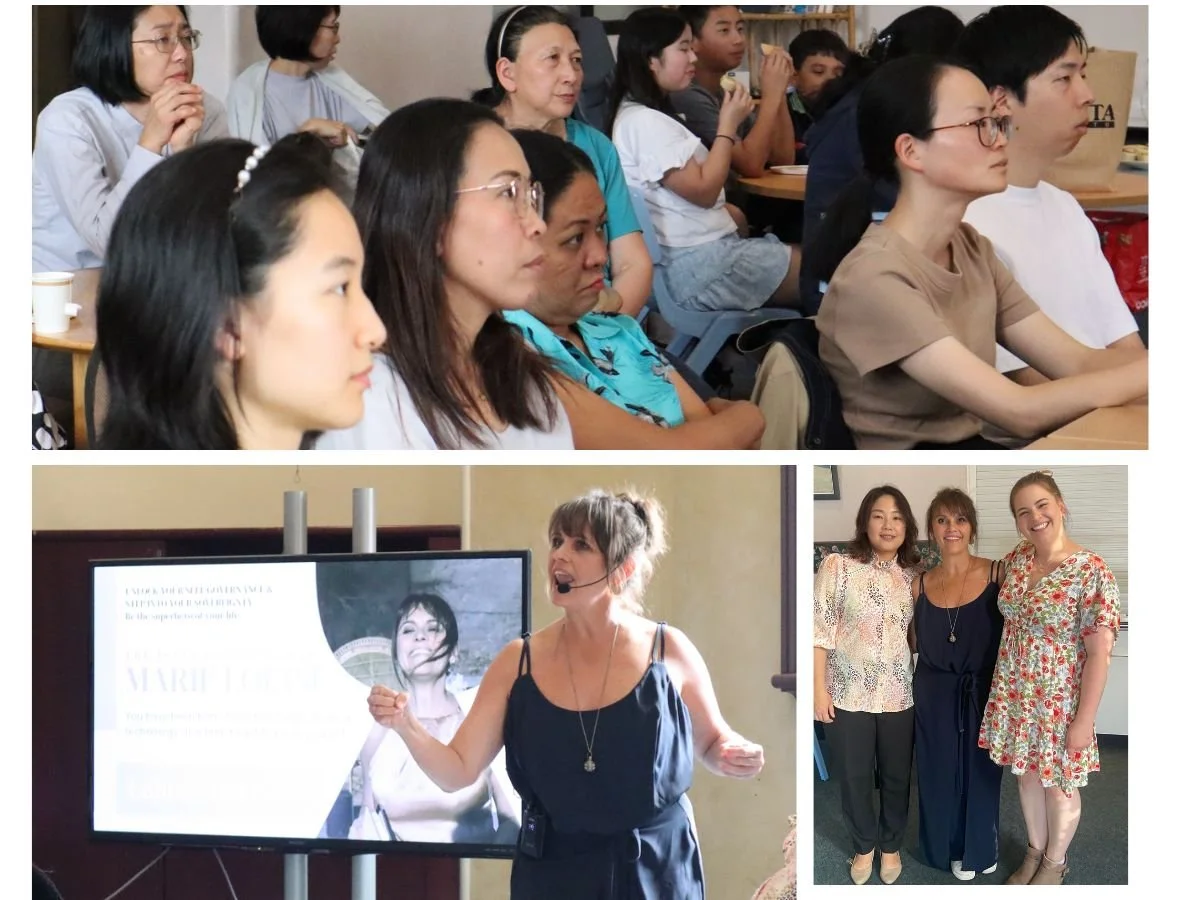
Mental health week
I had the honour of collaborating with the World Federation for World Peace during Mental Health Awareness Week. A special thank you to the visionaries behind this presentation, Satomi and Sam. The organisation does remarkable work fostering connection and promoting good in the world, elevating women’s capacity to lead together through love, action and connection, with the intention of transforming collective challenges towards greater coherence and thriving.
We gathered to connect, and I had the privilege of sharing a glimpse through my personal lens—the importance of cultivating sovereignty and self-governance.
Mental health has been a significant theme throughout my life, particularly through the experience of watching our beautiful mother being swept into the dis-ease of bipolar disorder. The impact touched not only her life, but all of us within our family system, as we navigated the often chaotic expressions of the condition. Our journey awakened many perspectives, with one profound realisation continuing to emerge for me: our capacity to serve the world is deeply connected to how we learn to love, care for and govern ourselves.
One of the beautiful strengths I see expressed through women is our capacity to nurture and nourish, yet including ourselves in that nourishment is often where the imbalance appears. As a collective, many women have become extraordinary givers without becoming equally comfortable with receiving.
Perhaps the airlines have it right: put your own oxygen mask on first.
When we continually serve from depletion rather than overflow, we can inadvertently contribute to the very dissonance we are trying to resolve. When we take greater responsibility for our own wellbeing, however, we reclaim more of our natural capacity and have something very different to offer the families, communities and systems we participate in.
This isn't about becoming perfectly balanced or perpetually well. It is about cultivating a more conscious relationship with our own mental, physical, emotional and spiritual wellbeing, allowing that coherence to ripple into the environments we touch.
This powerful space of self-responsibility can ignite greater coherence, connection and expression of our individual gifts, offering us a potent position from which to influence the world around us.
Key Takeaways
We are born into an extraordinarily sophisticated instrument—the human body. Learning how to understand and consciously relate to it develops self-governance and gives us greater access to its innate intelligence.
Together, we explored:
Self-love and self-care as foundational practices for wellbeing. When we learn to nourish our own inner garden, we create conditions that better support our mental, emotional and physical health—and increase our capacity to meet life from a fuller cup.
Rituals, meditation and breathwork as practical ways of tuning into ourselves and developing a more conscious relationship with the nervous system. These practices can support our movement from reactivity towards greater presence, awareness and choice.
The importance of movement, recognising that our history and habitual patterns can be expressed through the body. Movement gives us another way to process experience, shift energetic momentum and return attention to what is happening here and now. We are born to move.
Body, mind and emotional self-governance, allowing us to take the driver's seat without needing to suppress what we feel. Rather than being continually swept away by emotion, we can learn to recognise its energy, listen to its intelligence and become more conscious of how that energy finds expression.
Deeper listening through body awareness, creating space for intuition, creativity and innovation to arise. As we bring greater attention to the nervous system, sensation and the feeling body, we develop our capacity to respond rather than simply react—and deepen our relationship with this sophisticated human organism we get to inhabit.

Sunrise ritual
Sunrise Coogee Beach
Discover the transformative power of a sunrise meditation ritual. Learn how to harness the sun's energy to optimize your cells, decalcify the pineal gland, and expand your consciousness. A step-by-step guide to starting your day with intention and vitality.

A practice in attention, embodiment and the intelligence of light
There’s nothing quite like a little internal tune-up with the morning sun as your companion. That first light has always held something rather magical for me—the transition from darkness into illumination, the warmth beginning to touch the skin, the world waking up and, if we give ourselves a moment to actually be there for it, something within us waking up too.
This is where conscious attention becomes interesting. We can understand all sorts of things intellectually, but for something to become realised, eventually we have to play in it. Get our skin in the game. Allow the idea to move out of theory and into experience. This practice is beautifully simple.
Step outside as the sun rises. Find somewhere comfortable to sit or stand and allow yourself to arrive. Feel the air, the temperature, the earth beneath your feet and the morning beginning around you.
Rather than staring intensely into the sun, soften your gaze and receive the morning light. Breathe deeply and begin to bring your awareness into the skin.
Feel the light touching you.
As you inhale, imagine yourself receiving it through the whole surface of your body. Let the warmth and energy of the sun seep through the skin, reaching into the tissues and cells, waking up the internal landscape.
Play with it.
Imagine every cell joining the morning, a little internal dance of light, breath and attention.
As you continue to breathe, move your awareness towards the centre of the brain and the pineal gland. In my own practice, I experience the sun’s energy moving into this space, spinning away calcification and clearing the pathway for greater clarity, perception and insight.
I have experienced this process directly through practice, and for me the decalcification of the pineal is not simply an intellectual concept—it is something I have come to know through my own body and awareness. I don't need to make that experience a universal truth for it to hold value.
““Keep your face always toward the sunshine—and shadows will fall behind you.”
”
This is the beauty of experiential practice. Rather than accepting an idea because somebody else tells us it is true, we enter the experience ourselves. We bring attention, curiosity and awareness to the human instrument and discover what becomes available. The body becomes the laboratory. Spend some time here. Twenty minutes is beautiful when you have it, but this isn't another rigid prescription to get right. Let yourself build a relationship with the practice. Notice what happens. What changes in sensation? What happens to your breath? Your attention? Your energy? Your internal imagery?Your perception? Perhaps you feel warmth travelling through the body. Perhaps there is tingling, spaciousness, clarity or a subtle shift you don't yet have language for. Perhaps one morning you simply experience the pleasure of sitting quietly while the day wakes up around you.
It all belongs.
There are biological relationships between morning light and the rhythms of the human organism, but there is also the subjective, energetic and spiritual experience of meeting light consciously—and this is the territory I love to explore. Not everything we experience needs to be immediately explained. Sometimes we can simply enter into relationship with it.
Light has held spiritual significance across cultures and traditions for thousands of years, and I understand why. There is something rather extraordinary about consciously sitting with the source that illuminates our world and allowing ourselves to experience that relationship through the body. For me, this is where meditation becomes less about withdrawing from life and more about entering it.
Light.
Breath.
Skin.
Attention.
Energy.
Consciousness.
All meeting within the human sleeve. and this is why I continue to return to practice. We can read about consciousness, energetics, the pineal gland, meditation and the extraordinary intelligence of the human organism, but eventually our understanding has to find its way into lived experience.
Get your skin in the game.
Let your own evidence rise through your experience. Feel the change. Notice what opens. Stay curious about what you discover rather than needing to arrive at somebody else's conclusion. There is something wonderfully playful about that. A sunrise. A human body. Attention and the possibility that there is still so much about this extraordinary instrument we are only beginning to experience consciously.
So tomorrow morning, go and meet the light.
See what happens.

Introduction: Unleashing Life Force
Unleashing Life Force: A Yogic Tantric Perspective explores the profound concept of prana or chi, the vital energy that permeates the universe and animates all living beings. This blog delves into the essence of life force, its role in physical, mental, emotional, and spiritual well-being, and practical ways to enhance it through grounding, movement, nutrition, breathwork, joy, hydration, sleep, and creativity. Join us on a journey to unlock the secrets of life force, fostering a vibrant and fulfilling existence.
In the rich tapestry of tantric yogic perspective, the concept of life force, known as prana or chi, weaves through the essence of existence itself. It is the subtle energy that animates all living beings, flowing through every cell, breath, and thought. This vital force isn't just a philosophical abstraction but a tangible essence that sustains and rejuvenates us at every moment.
What is Life Force?
Life force, in the tantric yogic terms, is the cosmic energy that pervades the universe and manifests within each individual as the essence of vitality. Known as prana in yoga or chi in traditional Chinese medicine, it is the subtle yet potent force responsible for our physical, mental, emotional, and spiritual well-being. This energy isn't confined to the body alone but extends beyond, connecting us intimately with our environment and the universe at large.
The Role of Life Force
Within this framework, life force serves as the energetic foundation upon which all life rises through. Life force attention supports health, happiness, and spiritual growth to unfold. It nourishes our organs, sustains our mental clarity, and empowers our emotional integration. Beyond the physical realm, it fuels our creativity, deepens our spiritual practices, and enhances our overall sense of interconnectedness with all life in the cosmos.

Why Increase Your Life Force?
Increasing your life force isn't merely about boosting energy levels—it's about optimising your entire being for a vibrant and fulfilling existence. By enhancing prana or chi, you amplify your capacity to experience life fully through the five senses and more. This heightened vitality supports longevity, elevates immunity, enhances spiritual capacity, and fosters a profound sense of inner harmony and coherence.
Here is an exploration of practical and playful ways to elevate your life force. From grounding techniques to creative expression, each key invites you to embrace the flow of prana, enriching your journey towards a more vibrant and luminous life.
Join us as we embark on a journey to unlock the secrets of life force, igniting the spark of vitality that resides within each of us. Let's dive deep into practices that nurture, awaken, and celebrate the boundless energy of existence itself.
8 keys to elevating the body's life force from a yogic tantric perspective:
Grounding Feet in the Earth: Imagine your feet as the roots of a tree, connecting deep into the earth. This grounds you, stabilises your energy, and helps you tap into the earth's abundant life force.
Move Your Body: Shake it, shimmy it! Movement stirs up your glands and lymphatic system, keeping energy flowing and vibrant. Dance like nobody's watching!
Fresh Food Feeds Life Force: Skip the processed stuff. Fresh, wholesome foods are packed with vitality. Think juicy fruits, crisp veggies, and whole grains—less processing means more life force for your cells to dance with!
Breathwork & Pranayama: Inhale deeply, exhale fully. Conscious breathing floods your body with oxygen, igniting your inner fire just like that first breath at birth. Breathe in life force, exhale any stress.
Laugh and Love: Chuckle, giggle, snort—let joy ripple through you! Love generously. These high vibes flood your system with oxytocin, serotonin, and immune-boosting goodness. It's like a spa day for your soul!
Hydrate Like You Mean It: Sip, gulp, hydrate! Your body is a water wonderland—keep it flowing, supporting your liver and nervous system. Water cleanses, clarifies, and revitalises.
Sleep Deeply, Dream Wildly: Dreamland is where magic happens. Deep sleep rejuvenates your body and mind, helping you recharge your life force batteries. Embrace your dreams, they're your subconscious playground!
Create Anything, Unleash Your Genius: You're a creative powerhouse! Whether it's art, music, writing, or gardening—let your inner genius play. Creation sparks life force like fireworks in the night sky.
Don't be deceived by the apparent simplicity of these practices; each one holds profound depth and transformative potential. Take grounding your feet in the earth, for instance—it’s not just about physical stability but also about connecting with the earth's primal energy, fostering a sense of rootedness that extends beyond the physical realm. Similarly, engaging in breathwork and pranayama isn't merely about inhaling and exhaling; it's about harmonising your life force, awakening dormant energies, and achieving mental clarity. The benefits of these practices ripple far beyond their immediate effects, influencing everything from improved digestion and enhanced immune function to heightened creativity and spiritual growth. It is through regular, dedicated practice that these subtle yet powerful bioproducts reveal themselves, guiding practitioners towards a deeper understanding of themselves and their connection to the universe.
Remember, life force isn't just about existing—it's about thriving, pulsating, and radiating your unique sparkle in this cosmic dance we call life. So, ground yourself, move joyously, eat vibrantly, breathe deeply, laugh often, hydrate lovingly, sleep peacefully, and create passionately. Embrace these keys, and watch your life force soar

"Breaking Through - when relative truth becomes visible
Breaking free from mental noise
Understanding Limiting Beliefs and Their Impact
“There is nothing more confining than the prison we don’t know we are in. ”
There is nothing quite as convincing as a belief we don't know is a belief.
Once something has travelled with us for long enough, gathering experience and evidence along the way, it can stop feeling like an interpretation of reality and simply become reality. I'm not enough. There isn't enough. People like me don't do that. Money is difficult. Being seen isn't safe. Love requires me to give myself away. I couldn't possibly. That's just who I am.
Sometimes we don't even hear the words anymore. The belief has become part of the background hum, quietly participating in what we perceive, how we feel, the choices that appear available and the life we subsequently experience.
I think of these as relative truths.
They are not necessarily silly ideas we somehow picked up and now need to eliminate. Many of them made complete sense within the environments in which they formed. They may have arisen through experience, family, culture, relationships, things projected onto us, conclusions we made when we were young, or circumstances in which a particular way of seeing ourselves and the world helped us belong, protect ourselves or simply make sense of what was happening.
The relative truth can become woven into the organisation of the person until we are no longer simply thinking it. We are perceiving through it. This is why I've become less interested in the idea of “getting rid of limiting beliefs.” It is very easy to turn the belief into another thing that is wrong with us, another pesky piece of conditioning standing between us and the glorious expanded human we're supposed to become.
I'd rather get curious.
If something keeps appearing in our lives, a familiar relationship dynamic, a financial ceiling, a contraction around visibility, the inability to receive, a repeating emotional response, a place where we continually retreat despite consciously wanting to move forward, there is information there.
A question I use often in this work is:
What would I have to believe to be true for this experience or response to make complete sense?
It is a beautifully revealing question because it doesn't begin by assuming that our response is irrational. For a moment, we allow that there may be an internal logic to what is happening.
If being visible has become associated with rejection, of course some part of the organism may contract when visibility arrives. If receiving became tangled with obligation, consciously wanting abundance doesn't necessarily mean the whole instrument experiences receiving as safe or desirable. If love became associated with keeping everybody happy, saying no can carry far more energetic weight than the two letters would suggest.
Within that particular organisation of reality, the response makes sense. Once a belief begins to reveal itself, I like to play with the word true.
Is it true?
If the immediate answer is yes, and often it is, I become interested in the evidence. What experiences tell me this is true? Where have I seen it? How has life confirmed it?
Then I turn the lens slightly.
Have there ever been experiences in my life where this has not been true?
Even one?
Has there been a person, moment, relationship, opportunity or experience that doesn't quite fit inside the belief?
If there has, something interesting happens. We don't need to declare the belief false, but we can no longer hold it quite so easily as an absolute truth.
Then we can widen the lens again. Is this true for everyone? Does every human being experience this reality in the same way? If someone else can experience something differently, then what we are holding cannot be universally true.
It may still be very true for us. and that distinction is enormous.
Our lived experience doesn't suddenly become invalid because somebody else has had a different one. If someone has repeatedly experienced rejection, scarcity, abandonment, betrayal or not being heard, telling them “that's only a belief” completely misses the point. Those experiences happened. What we are exploring is the meaning that became organised around them and whether that meaning has subsequently become a lens through which future experiences are perceived.
Now we can ask something slightly different:
What would I have to believe for this to be relatively true for me? This is often where we begin travelling beneath the surface story. People always leave may reveal something closer to I'm not worth staying for. There's never enough money may open an entirely different conversation about safety, receiving, deserving, family history or what we learned was possible for people like us. I can't speak in front of people may have remarkably little to do with speaking and quite a lot to do with what being visible has come to mean within the instrument.
Once we discover the belief, we don't need to race off and replace it with a shinier one.
This is where some approaches to beliefs have never quite satisfied me. We can discover I am not enough, dutifully replace it with I am enough, repeat it every morning while brushing our teeth and still find that the body has apparently not received the memo. Because the organisation may not exist in words alone.
A belief can have a physical life, an emotional life, an energetic tone. It can participate in where attention goes and what we notice. It can influence the images we create, the possibilities we dismiss, the people we choose, what we expect from them and how we interpret their behaviour. This is where we put our skin in the game.
Rather than only asking what we believe, we can become curious about what believing it feels like.
Where does it live in the body? What happens to breath? Does something contract, rise, become heavy, numb, charged or restless? Is there an image? A memory? An impulse to move? Does the body want to pull backwards, push forwards, disappear, protect, speak, cry, run?
We don't have to decide immediately what any of it means. Sometimes the intelligence of the experience becomes clearer when we resist the urge to explain it too quickly. The body might reveal something the story hasn't.
An emotion can arrive that wasn't expected. An image appears. Breath changes. A sentence comes out of our mouth and suddenly we actually hear what we've been saying for years. Something previously fused into this is just who I am becomes visible as a pattern within the instrument, and that visibility changes our relationship with it.
This is where consciousness becomes very practical for me. We have this extraordinary capacity to become aware of what has been operating through us. Something that was once the lens through which we looked becomes something we are now capable of looking at, feeling and entering into relationship with. There is often momentum already moving within the pattern by the time we become aware of it.
This is where emotional maturation becomes particularly interesting.
Something happens and energy moves. We feel the charge, contraction, heat, fear, anger, agitation, grief or whatever form the experience is taking. Historically that momentum may have had a very familiar destination: withdraw, attack, please, freeze, hide, overperform, control, abandon the idea, silence ourselves. The momentum and its expression have become so familiar to one another that they can appear to be the same thing.
They aren't necessarily.
When we can connect to the momentum of the energy in its isness, without immediately suppressing it, naming it into a fixed story or allowing the old reflex to decide where it must go, another possibility becomes experientially available.
We can move with it.
We can breathe actively with it.
We can give it sound.
We can bring attention directly into its movement and allow attention to meet intention.
We can discover what happens when the same energetic momentum is given another pathway through the instrument.
This isn't about turning anger into love because love is spiritually superior, or convincing ourselves that fear is secretly joy. The raw experience deserves more respect than that. What we're developing is the emotional maturity and internal capacity to remain with the movement long enough to discover its intelligence.
Anger may contain power, clarity or the impulse for a boundary. Fear can contain an extraordinary amount of life and activation. A contraction around visibility may be carrying a younger intelligence that once understood hiding as protection. Grief can move through breath, sound or the body and reveal something that thinking about grief never touched.
The energy itself becomes material.
This is where the metaphor of alchemy becomes very tangible.
Steel to gold.
Not because steel was wrong.
Not because gold is “higher.”
The alchemy is in discovering that the raw material we thought could only express itself in one form contains other possibilities when awareness, movement, breath, attention and intention participate. This isn't something reserved for a particularly evolved few. It is an experiential availability of the human instrument. We already have the apparatus. We feel, perceive, move, breathe, imagine, direct attention, create meaning and express. The practice is developing a more conscious relationship with those capacities.
This is also why intellectual understanding remains important but isn't the whole story. We can understand a belief beautifully and still be living it. When understanding begins to move through sensation, emotion, energetic experience, behaviour and relationship, something else starts to happen.
It marinates and the development when it eventually appears in life.
Someone who has spent years understanding why they don't speak begins to use their voice without having to perform courage first. A person notices that the relationship dynamic that once swallowed them whole is happening again, but this time they remain connected to themselves inside it. An opportunity appears and the familiar contraction is still there, yet it no longer automatically means no. Creativity that has been held behind an old relative truth starts finding form.
This is where the experiential development becomes form. The old pattern may still exist. We don't need to ceremonially evict it from the psyche. But it is no longer the only reality available and it most definitely moves from a reflex to a choosing and hat changes what we can perceive.
Our beliefs participate in the images we project into life. If we are organised around an expectation of rejection, rejection may become particularly easy to see. If our internal architecture says there isn't enough, we may continually interpret the world through lack. What we hold as true influences what receives our attention, and what receives our attention influences how we respond. Our responses then participate in what happens next, and what happens next can conveniently become more evidence for what we believed in the first place.
Round and round we go. A relative truth can become a remarkably convincing reality when we've been helping to reproduce its evidence for years. This isn't blame. It is where response-ability begins to become exciting.
If awareness allows us to perceive the loop, then we have somewhere new to stand within it. We can recognise what has shaped us while also becoming curious about what else is available now and perhaps this is where my understanding of “breaking through” has changed.
I don't imagine us smashing through the walls of our conditioning anymore. There is something unnecessarily violent about trying to destroy architecture that may once have been constructed with considerable intelligence.Sometimes breaking through is much closer to seeing through and sensing new ways.
We see the relative truth. We discover what made it true for us. We recognise how it has organised itself through body, mind, emotion, nervous-system response, energetic movement and perception. We meet its momentum and somewhere within that meeting, the wall we thought was reality becomes something we can see. There is space around it. From there, something fresh has an opportunity to emerge rather than simply being prescribed by what happened yesterday.
This is where I experience our innate nature entering the conversation. Not as a perfect self hiding underneath all our messy conditioning, but as a deeper coherence carrying qualities of love, freedom, beauty, creativity, connection, curiosity and expression. As less of the instrument is occupied reproducing old relative truths, more of these qualities seem able to find form through the particular human being living the experience.
Our projection changes because the perceiver is changing. We see another possibility and, importantly, we can begin to experience another possibility. That distinction matters. Freedom isn't simply knowing that the wall isn't universally true. Freedom begins to become tangible when the organism discovers there is somewhere else it can move and once we've experienced that, even briefly, the old prison is never quite as invisible again.

The Alchemy of Self: Transforming Internal Energetics for Personal Growth
Transform your life with internal alchemy. Learn to shift outdated energetics through awareness and mindfulness for personal growth and self-improvement.
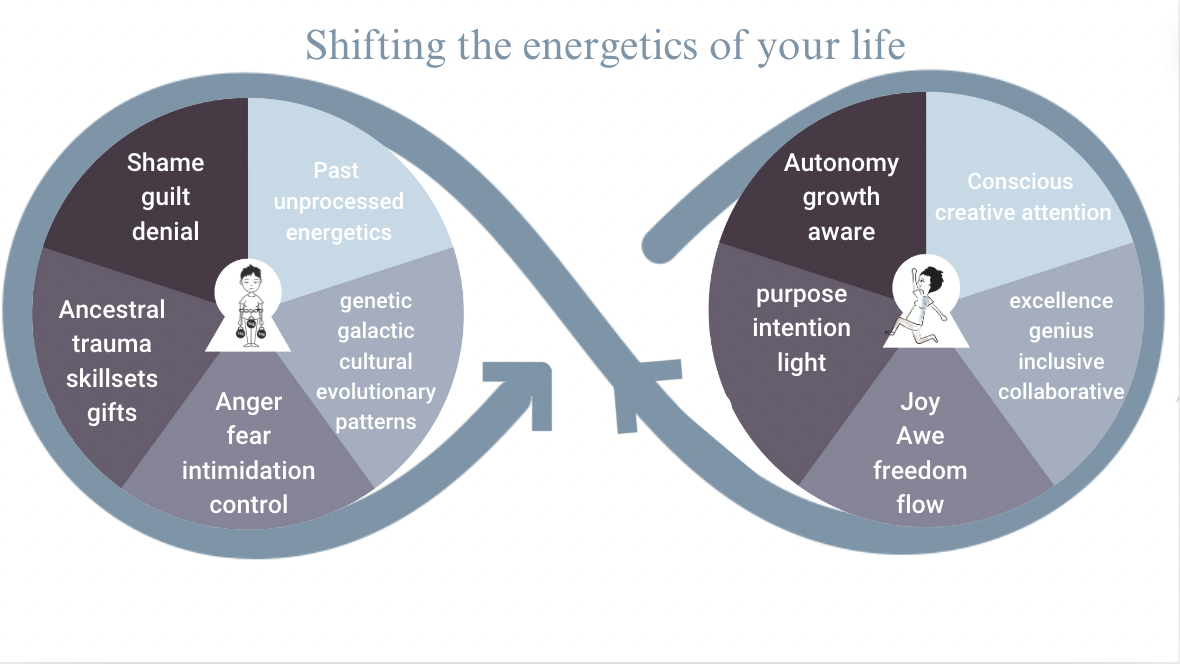
The Alchemy of Self
Alchemy has long been associated with the transformation of base metals into gold, yet there is another kind of alchemy available much closer to home. It takes place within the human instrument, in those moments when something that has been organising our experience becomes available to awareness and, through that meeting, is no longer required to remain in quite the same form.
Over many years of facilitating people through processes of human development, I have seen this happen in ways that can be subtle, immediate, surprising and sometimes quite profound. Someone may arrive wanting to understand a repeating relationship pattern, a fear around being seen, an emotional reaction that seems disproportionate to the moment, a contraction in the body, a belief they intellectually know is no longer true, or simply that familiar frustration of arriving at the same place despite understanding exactly how they got there.
We can know a great deal about ourselves and still find ourselves living the pattern. Intellectual understanding matters. Recognising where a belief or behaviour originated can create significant movement and give us a completely different relationship with our history. But there are times when the knowing hasn't yet travelled through the whole instrument. We understand something in the mind while the body, emotions or energetic organisation continue to respond according to something learned long ago.
This is where internal alchemy becomes interesting.
Our responses to life are not created through thought alone. The brain and nervous system participate, certainly, but so do sensation, emotion, memory, belief, perception, physiology, relationship and the energetic organisation of the person. Some patterns have been rehearsed so frequently that they have become familiar ways of meeting reality, while others seem to operate beneath conscious thought altogether.
We know them through their expression.
We hear ourselves saying the same thing again. We find ourselves choosing a familiar type of relationship. The body tightens in a particular situation. Our voice changes around a certain person. We become smaller, louder, pleasing, controlling, invisible or fiercely independent. We might consciously desire one thing while discovering that another part of the organism is moving in quite the opposite direction.
Rather than making these responses wrong, we can become interested in them.
What is actually happening here? What is moving through the body? What belief seems to accompany it? What does the organism appear to expect? Is there emotion, imagery, memory or an energetic quality attached to the experience? Does the response belong entirely to what is happening now, or has the present moment touched something familiar within us?
These aren't always questions that need immediate intellectual answers. In fact, one of the things I have witnessed repeatedly is that when we give the organism our attention without rushing to explain it, information can emerge through channels we might otherwise overlook.
A sensation moves. Breath changes. An unexpected emotion surfaces. An image appears. A memory that seemed irrelevant suddenly connects with something. We hear ourselves say a sentence we have probably spoken a hundred times before and, for whatever reason, this time we hear what is underneath it.
There can be a beautiful moment when something that has previously been fused into our sense of this is simply who I am becomes visible as an organisation or pattern within us. Nothing has necessarily disappeared, yet our relationship with it is already different because awareness is now participating.
This is one of the reasons attention plays such an important role in the work.
As we bring attention into the body, we become more sensitive to what is actually happening there. A contraction we might ordinarily rush to get rid of can become something we stay with for a while, not to indulge it or turn it into a problem, but to become curious about its composition. There may be emotion there, an old belief, an image, memory, energetic movement or simply a physical response whose intelligence becomes clearer through our willingness to listen.
Breath gives us another way of entering that conversation. In the processes of facilitation, Using the awareness and practices of breath is a powerful process of alchemy. Sometimes calm isn't what the experience is asking for. There may be anger that needs enough space to be felt, grief that has been beautifully contained, a boundary trying to find a voice, or excitement that feels remarkably similar to fear because expansion itself is unfamiliar.
At other times what emerges is harder to define. There may simply be movement, heat, charge, heaviness, vibration, contraction, spaciousness or a shift in the energetic tone of the experience. We don't necessarily need to hurry towards a label. As we breathe and remain present, we have an opportunity to experience what is happening before deciding what it means.
This is part of what I mean when I speak about internal energetics.
Being human is full of movement that we can feel directly. We experience contraction and expansion, vitality and heaviness, agitation and stillness, resonance, numbness, flow, charge. Some of these experiences can be understood through physiology and nervous-system function, others through emotion, psychology, memory and learned responses. Within my own work I also recognise energetics, consciousness and spiritual intelligence as dimensions of our experience, particularly when people begin perceiving information or movement that doesn't fit neatly within one explanatory model.
There is another part of this that I experience through the lens of emotional maturation: learning to meet the momentum of energy that is already here. Rather than immediately naming it, suppressing it, analysing it or allowing its familiar reflex to determine where it goes next, we can meet the energy in its isness — the actual movement occurring within the instrument now. This is where awareness becomes wonderfully practical. The charge itself can become material for conscious expression. Through movement, active breath, sound, attention moving into intention, or simply staying present long enough to feel what the energy is asking to do, we can discover that the momentum has more than one pathway available to it. What once moved automatically into anger may reveal power or a boundary; fear may contain an extraordinary amount of life waiting for movement; contraction may open into expression; grief may move through sound, breath or the body and reveal something we couldn't access by thinking about it. We are not pretending one emotion is another or trying to turn everything uncomfortable into something prettier. We are developing the emotional maturity to remain in relationship with the energy long enough for its intelligence to show us what else is available. This is experiential, and it is available to us through the very apparatus we are already living in. For me, this is where the steel-to-gold metaphor really earns its place: the raw material is not discarded; the same energetic momentum, met consciously, can find a different form of expression.
I don't feel the need to collapse these different dimensions into a single answer. We are multidimensional beings, and the richness is often in becoming sensitive to the conversation occurring between them.
A thought can change our breath. An emotion can move through the body. A shift in physical state can alter perception. Memory can arrive through an image. An energetic movement can reveal something before language catches up. Awareness itself can change our relationship with all of it.
The patterns within our body-mind organism can therefore be understood not as fixed objects but as living configurations shaped through genetics, experience, environment, relationships, beliefs, repetition, emotion, culture, conditioning and the countless ways life has moved through us. Some continue to support our expression beautifully. Others may still be organised around a reality that has passed.
Internal alchemy begins when those patterns become available to conscious relationship.
Not because the old pattern is bad and needs to be transmuted into something more attractive. If an organisation developed to protect us, belong, receive love or navigate an earlier environment, there was intelligence in its creation. We can honour that intelligence while recognising that what once served us may not be what we want organising our expression now.
This is where the alchemist gets to play.
We can feel what is happening rather than immediately escaping into explanation. We can breathe with it, move with it, listen to it and become curious about the beliefs or histories travelling alongside it. We can direct attention towards a different possibility and explore what qualities such as freedom, love, courage, creativity, receptivity or expression actually feel like within our own instrument rather than merely deciding that we would like more of them.
Years ago I used the phrase “I feel, I heal, I transmute.” There is still something in that language that I love, although my understanding of it has matured. Feeling isn't a guarantee of healing and not everything uncomfortable needs to become another personal-development project. What feeling can do is give us access to material that intellectual understanding alone may only circle around. It allows what has been organised within us to become part of our direct experience, where a different relationship with it becomes possible.
Sometimes change from that meeting is surprisingly quick. At other times it marinates.
The organism isn't a machine into which we insert awareness and receive transformation on demand. Some patterns soften through one very clear experience; others reorganise through repetition, relationship, attention and time. Different dimensions of us can also mature at different rates. We may comprehend something intellectually long before it becomes emotional knowing, embodied response or lived expression.
What matters to me is what eventually becomes visible in life.
Does someone who has spent years knowing they are worthy of being heard begin to actually speak?
Can we remain connected to ourselves in a relationship where we previously disappeared?
Does creativity that has been sitting behind fear begin finding form?
Can we meet a familiar situation and discover that the response that once seemed inevitable is no longer the only one available?
This is where alchemy moves beyond an interesting internal experience. Something has changed in the way we participate. To me, that is gold.
Not the elimination of discomfort or the creation of some permanently coherent human being floating blissfully above the messiness of life. Our humanity is far too magnificent for that.
The gold is greater availability.
More of the organism present to what is actually happening rather than automatically organised by what has happened before. More capacity to feel without being entirely driven by feeling, to think without every thought becoming truth, to listen to the body without making every sensation a problem, and to recognise energetic and intuitive information without abandoning discernment. As this relationship develops, we can become increasingly conscious participants in the way the instrument is tuned and this is where alchemy connects for me with our innate nature.
I experience something deeply coherent beneath much of the organisation we accumulate through life—not an untouched, perfect self hiding beneath our conditioning, but an intelligence carrying qualities that seem naturally inclined towards life: love, freedom, beauty, creativity, connection, curiosity, vitality and expression.
As some of the internal dissonance becomes integrated, those qualities can find a clearer passage through us. We don't have to manufacture them quite so forcefully. Their expression becomes more fluid because less of our energy is occupied maintaining an old configuration.
The image we project into life begins to refine accordingly.
The same world can be encountered through a different internal organisation, and therefore different possibilities become perceptible. We may see beauty where our attention once moved automatically towards threat, possibility where an old identity saw limitation, or another human being more clearly because we are no longer meeting them entirely through a history that belongs somewhere else.
That doesn't mean we create reality simply by thinking lovely thoughts. Life remains gloriously uncontrollable, and the full spectrum of human experience belongs here. It means that the instrument through which we perceive and participate in life matters.
And because none of us exists in isolation, what changes within us doesn't remain entirely within us either. Our internal organisation finds expression through voice, relationship, choices, creativity, touch, leadership, parenting, presence and all the subtle ways human beings influence one another.
A different internal tone enters the room. Another person receives it. Something different becomes possible between us.
This is where individual alchemy begins touching the relational and collective field. We are influenced by the environments in which we live and, through our expression, continually contribute something back into them. As awareness changes the way we participate, the information we offer the field changes too.
Perhaps this is why the old image of the alchemist still speaks to me. The raw material was never something to discard.
Our conditioning, emotional responses, beliefs, bodies, histories, nervous-system patterns, energetic movements and even the parts of ourselves we have spent years wishing were different all contain information. When we learn how to meet that material with awareness, curiosity and enough capacity to stay in relationship with it, what once appeared to be the obstruction can become part of the intelligence through which we develop.
We don't throw away the base metal. We discover what else it can become and somewhere within that process, more of our innate nature becomes available to move through the skin and take form in the life we are actually living.
Continue the exploration
Discover Worlds Within explores the human sleeve — body, mind, emotions, nervous system, energy, spirit and consciousness — and invites us to get our skin in the game, developing a lived relationship with the intelligence, conditioning and possibility moving within us.
Practical Steps to Internal Alchemy
Be Present to Your Body: Ground yourself in the present moment. This involves being aware of your body and its sensations.
Feel Your Bodily Sensations: Pay close attention to how your body feels. This might include noticing areas of tension, discomfort, or other sensations.
Breathe and Breathe Again: Deep, mindful breathing helps to calm the nervous system and brings more awareness to your current state, while gaining access to the mass of energetic internal happenings so you can consciously do something with them.
Direct Your Attention: Focus your attention on the areas of your life you would like to change. This conscious direction of your focus is where the alchemical process begins.
Exploring Internal Energetics
Looking at this image attached represents the patterns of internal energetics within our body/mind organism. This image can help you explore patterns within the skin and what they are made up of and direct those patterns that no longer serve you into new desires or qualities of change. By becoming present with your body, feeling your sensations, and consciously breathing, you create a space where you can direct your attention and life force towards transformation.
In essence, becoming aware of your reactions and beliefs, feeling deeply into your sensations, and consciously choosing where to direct your attention allows you to become an alchemist of your own life. This internal process of alchemy leads to profound personal transformation and the realisation of your highest potential.

#PersonalGrowth #SelfTransformation #InnerAlchemy #Mindfulness #SelfAwareness #EmotionalIntelligence #Neuroscience #MentalHealth #SelfImprovement #ConsciousLiving #HolisticHealth #Transformation #Wellbeing #MindBodyConnection #InnerPeace

Trigger Joy, Trigger Healing, Trigger love
Marie Louise explores how memory and attention can reconnect us with experiences of joy, love, beauty, freedom and play—and make those qualities more available in the way we live and express ourselves.
This photo popped up in my memories today and immediately took me back to Bali, flying through the air on a swing with that glorious mixture of freedom, beauty, ridiculousness and play that makes you feel very alive.
I can look at the photo now, years later, and something of the experience returns. Not in exactly the same way, of course. I am sitting here looking at a photograph rather than swinging through the Bali air, but my body responds to the image. I remember the feeling. My face changes. There is warmth, gratitude, generosity, connection, and that delicious quality of playfulness that can disappear remarkably quickly when we get busy being serious grown-ups.
I love that.
An experience happened once, yet something of its imprint remains available to me. We tend to understand this very easily when the memory is uncomfortable. Something reminds us of an earlier experience and suddenly the past has found its way into the present. A smell, a place, someone's tone of voice, a particular expression on a face, and the human instrument responds. Memory isn't always experienced as a tidy story filed away in the mind; it can arrive through sensation, emotion, imagery, association, physiology and the almost instantaneous meaning we make of what is happening now.
We speak a great deal about these difficult imprints, and rightly so. Understanding the way our histories participate in our present experience is an important part of human development. Yet I have become equally interested in another question: if our organism can become familiar with pathways of fear, protection and dis-ease, what happens when we deliberately give attention to experiences of joy, love, beauty, connection and freedom?
This isn't about pretending everything is wonderful. I have no interest in using joy as a brightly coloured curtain we pull across grief, anger, fear or whatever else is genuinely asking to be experienced. All of it belongs to this extraordinary spectrum of being human. What interests me is our participation in where attention goes.
I have noticed in my own life that the more I invite my mind to remember joyful experiences, the more readily they seem to appear. It is almost as though I am reminding the instrument, these are part of your history too. There is neurobiological shift. That matters to me.
Our histories aren't made only from the experiences that hurt us. They also contain the afternoon we laughed until we couldn't breathe, the person whose presence made our whole body soften, the ridiculous adventure, the music that cracked something open, the first swim of summer, the smell of somebody we loved, the dog that greeted us as though we'd returned from a decade-long expedition when we'd only been out for twenty minutes.
There are thousands of these moments woven through a life and many of them disappear from immediate attention simply because we're no longer looking in their direction. A photograph can bring one back.
So can music. Smell is magnificent at it. Movement can do it. A conversation. A piece of clothing. Returning to a place. Closing our eyes and deliberately allowing ourselves to remember not merely what happened, but what the experience felt like from within.
There is something quite different about remembering Bali as a fact, I went on a swing, and allowing myself to receive the sensory image again: the height, the air, the movement, the landscape, the laughter, the freedom of surrendering to the swing and letting myself be carried through space. Now the memory has some juice in it, this is where a simple photograph becomes a practice in attention.
I can stay with the feeling for a little longer instead of glancing at it and moving on. I can let myself enjoy it without needing to turn it into anything productive. I can notice what joy feels like in my particular instrument. I can marinate in it. Where does it live? Does the chest open? Does breath move differently? Does my face soften? Do I want to move, laugh, reach towards somebody, create something, go outside?
The interesting thing is that joy rarely seems to remain an isolated little emotion. When I give it room, other qualities often come along for the ride. Generosity appears. Beauty becomes easier to notice. I feel more affectionate towards people. Creativity has a little more room. Play becomes possible. Gratitude isn't something I need to manufacture because it has arisen naturally from the experience itself.
This is what I mean by marinating.
Rather than grabbing a pleasant memory and quickly demanding that it improve me, I can spend some time in relationship with the qualities it awakens. Let the instrument receive them again. Let attention linger. There is good reason to be interested in this from what we understand about memory, attention and the brain's capacity to change through experience, but I don't want to reduce the whole thing to biochemistry. Biochemistry participates, absolutely. So do the nervous system, emotion, perception, imagination, sensory experience and the meaning we give things. Through the wider lens of my work I am also interested in the energetic tone of an experience—the very different quality we can feel in ourselves when we are contracted, connected, joyful, frightened, playful, loving or free.
We know these differences from the inside. We also know them in one another.
Walk into a room where someone is genuinely delighted to see you and something is communicated before either of you has delivered a lecture on your respective internal states. Joy has expression. Love has expression. Playfulness has expression. They move through faces, voices, bodies, gestures, attention and what becomes possible between people.
So this little practice isn't only about feeling good. It is an exploration of what we are nourishing within the instrument and, consequently, what becomes more available for expression through it.
I think this is an important distinction because conscious creation can easily be misunderstood as trying to control reality with our thoughts. That isn't what I mean. Life will continue to bring the full spectrum. Things will happen that we would never consciously order from the menu, and when grief comes I want the capacity to grieve; when anger has intelligence I want to hear it; when fear communicates something important I don't want to paste a smiling Bali photograph over its mouth.
I also don't want to unconsciously rehearse dis-ease simply because the mind has become extraordinarily good at finding it.
There is room to become intimate with the difficult and to deliberately nourish what is beautiful. For me, that is part of self-governance: developing enough relationship with attention to recognise that I can participate in what I repeatedly give life to.
Today a photograph did it for me. Bali. A swing. A moment of surrender and ridiculous joy that my human instrument apparently still remembers rather well. So I am letting myself enjoy the memory. I am giving it a little airtime, allowing the feeling to move through me again and noticing what comes with it. Love. Beauty. Connection. Generosity. Freedom. Play.
Thank you, thank you, thank you. What a lovely thing to discover tucked away in the archives of myself and what a lovely reminder that when we go looking through our history, there is so much more there than what hurt.
There is also what made us come alive.

Ways in which we can cultivate and infuse the feedback of joy to be a pattern rich in the embodiment is.
Bring out your album of great vibes and trigger the feels.
Enliven the practice of appreciation. Look at what you do, have or have had and feel the feels. Who was involved and how did they support you in your now. Good, bad and ugly. Dive into the appreciation station.
Bring on your child like spirit. Remember what it feels like to truly play, just for playing sake.
Have fun, smile and laugh at many things.
Here’s to triggering more joy and living life in this moment. 🌟💖
#JoyfulMemories #HealingThroughJoy #BaliSwing #LivingLifeFully

Freedom - the inner child chat
Marie Louise explores inner child integration as an experiential process for developing greater freedom, coherence and access to the innate intelligence seeking expression through us.

Freedom — The Inner Child Chat
Freedom, is a very different thing when it moves from an idea into the skin.
This is one of the reasons I have such respect for inner child integration. I have taken many people through these practices over the years and there is something quite profound in watching what happens when a person meets an earlier aspect of themselves from the awareness they have available now. What can look almost ridiculously simple from the outside; closing the eyes, bringing an image or felt sense of the younger self into awareness, listening, speaking, allowing, perhaps offering love or reassurance, can create a very obvious movement in the person experiencing it.
You see it. Sometimes in the face, sometimes in the breath or the way the body suddenly occupies space differently. The voice can change. There can be tears, laughter, anger, softness, silence, or an unexpected piece of information that seems to arrive from somewhere beyond the conversation we thought we were having. I have watched and experienced people access an understanding through these processes that they have been trying to intellectually resolve for years, yet when it is perceived through the body, imagery, feeling and the wider field of their awareness, it has an entirely different quality. It becomes theirs.
This is where the process gets really interesting for me because I am not simply interested in revisiting what went wrong in childhood. I am interested in what becomes available now in processing.
We were extraordinarily receptive little beings. Before we had language sophisticated enough to explain the world, the apparatus was already receiving it. Genetics, biology, family, environment, culture, relationship, tone, touch, absence, approval, fear, love, expectation and projection were all part of the soup. We were reading the room long before we knew that was what we were doing, and the body-mind was making adjustments according to what it perceived was needed.
A child who discovers that being quiet creates harmony may become exquisitely good at quiet. Another learns that achievement creates attention. Another becomes funny. Helpful. Invisible. Fiercely independent. The one who needs nothing. The one who keeps everybody together. There is an intelligence in this that I don't want to make wrong. The mask that formed may have been a brilliant little piece of engineering for the environment in which it was created.
It is when we continue wearing it long after the environment has changed that things can get a little tight and this is where I experience the inner child not simply as wounded material from the past, but as a doorway into aspects of our nature that may have been constrained along with it. The freedom to play, to imagine, to receive, to be curious, sensual, expressive, ridiculous, tender, creative, noisy, quiet, wildly interested in a beetle for twenty minutes, whatever belonged naturally to that particular being before the editing became so efficient.
When an integration process touches this territory, there can be a fluidity that returns which is quite beautiful to witness. It isn't necessarily dramatic. A person may simply begin expressing themselves with less effort. They might speak more directly, receive affection differently, become more playful, find themselves creating again, or realise they no longer need to perform the familiar role that has organised their relationships for years. This is the development that interests me: not simply having an insight in the process itself, but seeing the fruits of it appear later in the way someone actually lives.
There is an intelligence revealed through this that I find difficult to reduce to one mechanism, and I don't feel the need to. The psyche participates, the body participates, memory and imagination participate, our neurological and physical reflexes participate, and so do the energetic and spiritual dimensions of experience. Sometimes the perceiver knows exactly what has shifted and can articulate it beautifully; other times something has simply moved and the meaning arrives later.
The experience itself has intelligence.
Perhaps this is also why I experience our innate nature as coherent. Not perfect, polished or permanently peaceful, but coherent in the sense that when more of the instrument is available to itself, its expression becomes less distorted by all the energy required to maintain old protection. There is more room for the finer images of our nature to find form; love, beauty, creativity, freedom, connection, curiosity, generosity, play. They begin to appear not because we have pasted them over the uncomfortable parts of ourselves, but because the organism has more freedom to express them and what we hold within inevitably colours what we project into life.
If I am organised around an old expectation of rejection, that expectation will participate in the images I perceive and the way I meet people. If I have learned that being seen is dangerous, I can consciously desire visibility while another part of the apparatus quietly keeps pulling the curtains closed. When that younger organisation is finally met, listened to and included rather than overridden, the projection can begin to change because the perceiver has changed.
The world may be exactly where it was yesterday, but suddenly there is another image available.
That is a form of freedom experiential understanding opens through the experience of practice.
It is also why the practices around inner child integration don't have to be terribly serious. Play is potent. Creativity is potent. Nature, movement, laughter, imagination, meditation, giving ourselves permission to be beginners again, all of these can nourish parts of the instrument that adulthood has sometimes squeezed into very sensible little boxes.
I love observer meditation for this reason. It allows us to notice that we can witness what is moving without immediately needing to become it or change it. Inner child meditation brings another quality again because we deliberately enter relationship. I might invite someone to see themselves at a particular age, notice what arises without scripting it too quickly, and begin a conversation. How would you speak to this child? What tone would you use? What happens when you offer encouragement, protection, permission or simply your presence? What does the child show you?
Often the most profound part is not what we tell the child but what we receive back. That is where the chat becomes a two-way street. It becomes a physical shift and the anatomy changes because of what releases or is exposed.
The adult has perspective and resources that weren't available then, while the younger self can carry qualities and information the adult has lost contact with. Integration allows those worlds to meet, and I have watched that meeting create an extraordinary shift in how a person perceives themselves and subsequently participates in life.
Maybe that is why I don't see inner child work as continually returning to the past. Done well, it seems to do almost the opposite. It releases energy for the present and the nurturing quality that opens up for the iindividual supports maturation of previous story/experience.
There is less effort required to keep the old architecture standing and more life available for what wants to move now.
More of the innate nature gets through and when love, freedom, beauty, creativity and the peculiar genius of an individual human being are given a clearer passage through the instrument, they don't stay inside the skin. They become choices, relationships, creations, conversations, environments and the images we offer back into the collective field.
We aren't only tending the child we were. We are giving greater freedom to the human being we are here to express.
Have fun exploring.
Continue the exploration
If you want to take the inner-child inquiry beyond an idea and into your own human instrument, Discover Worlds Within explores the body, mind, emotions, nervous system, energy, spirit and consciousness through which we experience and express life.
Explore Discover Worlds Within →
Continue the exploration
Discover Worlds Within
Discover Worlds Within explores the human sleeve — body, mind, emotions, nervous system, energy, spirit and consciousness — and the conditioning, intelligence and possibility that participate in the way we experience and express life.
An invitation to understand what has shaped you while becoming increasingly available to what wants to move through you.
Explore Discover Worlds Within →

Lean in, breath in
Marie Louise explores dissonance as information and the possibility that breath, embodied awareness and curiosity can open space between our familiar reflexes and what we choose to express next.
What if the subtle niggle isn't something to get rid of, but something worth getting curious about?
There is that moment when something hits. A comment. A look. A conversation that suddenly takes a turn. An opportunity you have been asking for finally arrives and, instead of throwing your arms in the air with excitement, something inside you contracts and whispers, Oh shit. The body has entered the conversation.
Sometimes long before we've consciously worked out what the conversation is about. A tightening in the chest, a shift in breath, a knot in the belly, heat moving through the skin, an urge to explain yourself, defend, retreat, blame, fix, shut down or get the hell out of there. The movement can be enormous, or it can be so subtle that we barely notice it before the mind has swept in with its interpretation of events.
This is bad. They shouldn't have said that. I can't do this. Here we go again and off we go. I find this little meeting place fascinating. The place where life meets the instrument and the instrument responds.
I call what arises here dissonance. Not because it is inherently wrong, negative or something we need to clear from our system, but because something has moved out of its familiar hum. There is friction. A rub. Something in the field of our body-mind has been activated and is communicating. The question for me has become less How quickly can I make this feeling go away? and more:
What if I lean in?
Not recklessly. Not overriding the intelligence of fear, ignoring boundaries or forcing myself into experiences that don't feel right. Leaning in isn't another cleverly disguised way of bullying ourselves into growth. It is simply an invitation to become curious.
Before the Story Gets Its Pants On
Our human organism is wonderfully quick. Something happens and biology, memory, emotion, nervous-system response, conditioning and whatever else is humming through the instrument can be in motion before our conscious mind has even located the car keys. Then along comes interpretation and interpretation matters. The mind is part of this extraordinary apparatus too. It helps us make meaning, discern, understand, imagine, remember and navigate our world, but sometimes the mind is interpreting the present through material gathered somewhere else.
An old relationship.
An early experience.
Something we learned about ourselves.
A family pattern.
A previous rejection.
A belief we've rehearsed so often it no longer feels like a belief; it simply feels like reality.
This is where the invitation to be curious about the territory before the label. Before this is anxiety. Before this is rejection. Before you have made me feel this. Before the anger rises because...
What is actually happening in the skin? Tightness? Heat? Pressure? Tingling? Movement? A pull backwards? A rising force? A heaviness? Something expanding? Something wanting to get very, very small?
Can I be with that movement for a moment before I brand it? There is value in naming our emotions, of course. Language can illuminate and help us communicate what is happening within us. But there is also a delicious intelligence in allowing ourselves to feel before we explain. Sometimes the story is accurate.Sometimes it isn't. Sometimes the sensation itself has more to tell us before the mind turns it into a three-act drama and this is where I breathe.
Not because breath is some magical eraser of uncomfortable human experience. I'm not particularly interested in using breath to make myself calm so I can get back to being a “good” regulated human. I breathe because breath brings me into relationship.
Here.
Skin.
Sensation.
Movement.
What is actually happening?
Perhaps the breath changes something. Perhaps it doesn't. Perhaps the contraction becomes stronger for a moment. Perhaps tears arrive. Perhaps the body softens. Perhaps underneath what I thought was anger there is grief, and underneath the grief there is love, and underneath that there is something I don't have a bloody word for.
Good. We don't always need one.
Dissonance Has Its Own Intelligence
We've become rather fond of turning discomfort into something to overcome. Fear must be conquered. Blocks cleared. Negative beliefs replaced. Triggers healed. Resistance broken through, but what if dissonance is not necessarily the enemy of development? What if sometimes dissonance is development knocking at the door an old identity meets a new possibility and there is friction.
Desire meets protection. Love meets fear. Something wants to expand while another part of the organism has become exquisitely skilled at keeping life within familiar boundaries. Of course there is a rub. The body has history. The mind has history. Our emotional landscape has history. The nervous system has history and, through the energetic and spiritual lens through which we also could experience human life, there may be movements and resonances that don't fit neatly into any one explanatory box. We don't need to decide which dimension is the answer. We can be interested in their conversation. This is the multidimensional playground of being human.
Something can make complete sense intellectually and still bring the body to its knees. Something can shift in the body before the mind understands what has happened. A spiritual realisation can open an enormous field of perception and then Tuesday afternoon arrives and somebody says exactly the right thing to illuminate a reflex we thought we'd transcended three years ago. Welcome back to the skin.
This is where maturity marinates.
Understanding has to meet experience. Experience meets biology. Awareness meets conditioning. Relationship pokes at the bits we cannot see alone. The organism gathers new information, and sometimes—slowly, messily, beautifully—something reorganises.
The Tiny Gap Where Something New Can Happen
There is a delicious little moment, sometimes so bloody small we miss it, where something has landed, the body has responded and the mind is halfway through building its case for what just happened and somewhere in that mix, awareness can arrive.
Oh. Look at that. Something is moving in me. That is all. We don't need to immediately transform it.
The reaction may still come. We may still cry, speak, shake, leave, set a boundary, say no, say yes, ask for space, discover that the fear was extraordinarily intelligent or realise that an ancient reflex has just walked into a completely new situation wearing an old costume.
But now we are in relationship with the response rather than entirely being driven by it.
This is one of the places we can experience self-governance—not as self-control, but as developing such an intimate relationship with our own instrument that we begin to recognise what is moving through it and with recognition comes possibility. Not certainty but Possibility. Perhaps the old reflex still wins this round. That's okay too. Awareness has now met it. Something new has entered the field.
And It Doesn't Stop at Our Skin
This is where the inquiry becomes even more interesting, because nothing we express exists entirely in isolation.
If we meet dissonance differently, the expression we bring into relationship may also be different. Perhaps instead of immediately retaliating, we become curious. Perhaps instead of collapsing, we discover a boundary.
Perhaps instead of making another person responsible for everything moving through me, I can feel what belongs to me while still remaining clear about what belongs to them.
Perhaps a reflex that has travelled beautifully and efficiently through generations of our families meets awareness in the body and, this time, doesn't travel forward in quite the same form.
What happens then? A conversation changes. Someone else's body receives a different signal. A child witnesses another possibility. A relationship reorganises. A room has a different tone. This is where the subjective begins to touch the collective.
We are individual instruments, yes, but we are also continually entering one another's fields of experience. We influence and are influenced. Our states, choices, actions, language, touch, attention and reflexes become part of the environments other human beings inhabit.
Through a wider consciousness lens, Let’s remain curious about how far that influence travels. We don't need to pretend we know. The inquiry itself is enough to alter the quality of my participation.
Because if what I express contributes something to the field we share, even in the tiniest way, then getting curious about what moves through this skin becomes more than a private self-development exercise.
It becomes participation.
So, Lean In. Breathe In.
Maybe transformation doesn't always announce itself with fireworks and a life-changing revelation.Sometimes it is the subtle niggle. The breath you nearly didn't notice yourself holding. The flash of heat.The tightening jaw.The familiar story gathering momentum and that tiny flicker of awareness that catches it:
Hello. There you are.
Stay for a moment.
Breathe.
Feel before you fix.
Listen before you label.
Let the body have a word.
Let the mind have one too.
Let whatever energetic movement is present be part of the conversation and perhaps ask—not with an agenda to immediately change anything, but with genuine curiosity:
What is this showing me?
What is actually moving beneath the story?
Is this moment asking me to protect myself, express myself, soften, move, speak, wait, leave, stay—or simply feel?
And then perhaps the most interesting question of all:
What wants to move through me next?
Not what would the perfectly healed version of me do. Not what response earns me the highest consciousness badge. What becomes available here, in this actual body, in this actual moment, with the awareness I have now? Lean in.Breathe in. Get your skin in the game.
There may be far more intelligence moving through that subtle niggle than we first imagined.
Continue the exploration
Discover Worlds Within is an invitation to become curious about the extraordinary human sleeve — body, mind, emotions, nervous system, energy, spirit and consciousness — and the intelligence, conditioning and possibility moving through it.
Not simply to know more about yourself, but to experience yourself.