
I Am Here
I Am Here embodied presence meditation by Marie Louise
An Embodied Presence Meditation with Marie Louise
What happens when we stop trying to silence thought and discover that attention can move?
I Am Here is an experiential meditation inviting you into the direct experience of essential attention to the body of skin. Bringing attention to breath, sensation and the living communication of the body-mind organism.
There is nothing to achieve and nowhere else to get to.
Thoughts may arise. Sensations may shift. The body may contract and release.
Rather than fighting what appears, we become curious about what is here.
One sensation. One feeling. One moment at a time.
An Invitation Into Presence
So much of our attention is continually moving towards what has been, what might happen next, what needs doing, what needs changing, or what our mind has decided deserves our attention.
Meditation gives us an opportunity to become curious about attention itself.
Not necessarily to stop thought.
Not to deny what we are feeling.
Not to force the body into a particular state.
But to notice.
What is happening in the body?
Where is attention?
What happens when attention moves towards sensation?
Can I notice contraction without immediately needing to change it?
Can I experience a breath without needing it to be different?
Can I become available to this moment as it is?
I am here.
I am open.
I am available in this moment.
Presence is not an idea to understand.
It is something we experience.
And perhaps, as we become increasingly available to the extraordinary experience of being human, more of the intelligence of life becomes available to move through and express as us.
Get Your Skin in the Game
Meditation is one of the experiential doorways within my wider exploration of human development, consciousness and the extraordinary human organism.
The invitation isn't simply to gather more information about ourselves, but to develop relationship with what we can directly experience; body, mind, emotions, nervous-system responses, energy, awareness and spirit.
Because you don't learn to drive a car by reading about it.
Your skin has to be in the game.
If you're curious to explore this inner landscape more deeply, Discover Worlds Within offers practical processes, activations and inquiry into the human sleeve and our capacity for greater awareness, self-governance, conscious creation and authentic expression.
Explore Discover Worlds Within →
#Presence #Attention #Embodiment #Consciousness

Level up or in
Marie Louise explores human development as a multidimensional process of maturity across body, mind, emotion, energy and consciousness, and asks how individual awareness participates in the collective.
Embark on a journey through the realms of consciousness, where each level offers a new vista of reality waiting to be explored. Where do you find yourself on this spectrum? Does your perception shift as you navigate through life's varied experiences?

Level Up or In?
What if human development is less a ladder of consciousness and more a multidimensional marination of maturity?
We have long been fascinated by the idea of levels.
Levels of consciousness. Levels of development. Higher states. Lower states. Awakening. Self-actualisation. Transcendence.
Abraham Maslow gave us one of the most recognisable maps of human motivation and development through what became known as the hierarchy of needs — moving through fundamental human needs towards self-actualisation, and in his later thinking, towards self-transcendence.
These maps can be useful.
They give the mind a way of comprehending something enormously complex. They offer us a vantage point from which to observe ourselves, recognise patterns and contemplate what else might be possible.
But a map is not the territory.
And I find myself increasingly curious about whether human development is adequately represented by a ladder at all.
What if we don't simply level up?
What if we level in?
Maturity Marinates
I have come to experience human development as something far less linear.
Maturity marinates. It takes place across multiple dimensions of the human experience, each continually informing and influencing the others.
Our genetics participate.
Our environment participates.
Our biology participates.
Our family and culture participate.
Our nervous system participates.
Our emotional experiences participate.
Our beliefs and conditioning participate.
Our relationships participate.
Our attention participates.
Our energetic experience participates.
Our spiritual inquiry participates.
And consciousness participates in our capacity to become aware of the whole extraordinary process. Rather than a series of neat developmental steps, I see something more like a living field of influence continually organising, adapting, responding and expressing itself through the human being.
Experience meets genetics.
Environment meets biology.
Conditioning meets awareness.
Relationship meets reflex.
Thought meets sensation.
The subjective meets the objective.
The individual meets the collective.
Consciousness meets form.
Somewhere within all of this, we mature. Not necessarily evenly, not necessarily predictably and certainly not in a straight line.
We Can Be Mature Here and Reflexive There
This multidimensional view helps explain something fascinating about being human. We can have extraordinary awareness in one area of our lives and find ourselves profoundly challenged in another. We may intellectually comprehend something for years and still discover that our body responds differently when the experience becomes personal. We may have expansive spiritual experiences and still encounter deeply conditioned emotional responses in relationship. We may demonstrate enormous professional intelligence and leadership while struggling to remain present with grief. We may understand the workings of the nervous system and still find ourselves in the middle of an automatic reaction before awareness catches up.
None of this necessarily represents failure or regression. It may simply reveal that different dimensions of us mature in different ways and at different times.
This is why I don't want to dismiss intellectual understanding in favour of embodiment, or embodiment in favour of spiritual experience, or scientific understanding in favour of intuitive knowing. I am interested in the relationship between them. Something can first be understood intellectually. Later experienced emotionally. Recognised physically. Encountered relationally. Perceived energetically. Contemplated spiritually and eventually something that we once knew becomes something we are increasingly able to live.
That is a very different idea of development.
The Human Sleeve
I sometimes call this multidimensional instrument our human sleeve.
The body, mind, emotions, nervous system, energy, senses, spirit and consciousness through which we experience and express life. We don't encounter reality independently of this instrument. We encounter life through an organism shaped by genetics, history, environment, experience, relationships, culture, memory, conditioning and the innumerable influences that have participated in our development and so our perception is not passive. The instrument participates in what is perceived. What one person experiences as possibility, another may experience as threat. What once contracted us may later become something we can remain present with. Something that was once completely outside our awareness may suddenly become visible. The external scene may not have changed at all, yet the internal organisation through which we experience it has.
A different experience of reality becomes available.
This is where consciousness becomes fascinating to me. Not simply as something we possess, achieve or elevate, but as the awareness through which we can begin to recognise the instrument itself and ability to express freely through it.
Subject. Object. Field. Awareness
There is another dimension to this inquiry. I am the subject of my experience and simultaneously, I become an object within yours. My body, words, actions, state, attention and expression enter your environment. Yours enter mine.
And when we come together, something else emerges: the field between us.
A relationship.
A family.
A room.
A community.
An organisation.
A culture.
A collective.
We influence these fields and are influenced by them.
Our nervous systems respond to one another. Behaviours are learned. Ideas travel. Language shapes perception. Emotional states can move through groups. Cultural patterns become normalised. Ways of responding can be passed from one generation to another and beyond what we can readily observe or measure, I remain interested in a larger conceptual and spiritual inquiry:
How does an individual shift in awareness participate in the consciousness of the collective?
I don't offer that as a conclusion. I offer it as a place from which to look.
The Hundredth Monkey and the Power of a Concept
There is a story often referred to as the hundredth monkey effect. In its popular telling, a new behaviour learned by a group of monkeys eventually reaches some critical threshold and somehow becomes available to monkeys elsewhere. The story has often been used to suggest the existence of a collective field of consciousness. As literal scientific evidence for such a mechanism, the popular version of the story does not hold up particularly well but I still find the concept interesting.
Because a concept does not need to masquerade as scientific proof to become a valuable lens for human inquiry. The hundredth monkey story invites me to contemplate:
What becomes possible within a collective when enough individuals begin perceiving, responding or behaving differently?
We already know through ordinary human experience that individual change does not remain entirely individual. A parent interrupts an inherited response and a child grows up inside a slightly different environment. One person refuses to participate in a familiar pattern and a relationship has to reorganise. Someone introduces a new idea and eventually an organisation speaks a different language. A generation questions something the previous generation accepted as normal and culture begins to move. One organism changes its expression. That expression enters the environment. The environment is now, however subtly, different. What happens next?
That question fascinates me.
Resonance as a Way of Listening
This is also where the language of resonance remains meaningful within my work. I experience the human being as having tone. Sometimes we feel coherent. Sometimes dissonant. Sometimes contracted. Sometimes expansive. Sometimes something resonates before we have language for why. We feel drawn towards something. Repelled by something. Opened. Closed. Energised. Quietened. Alive.
These experiences don't need to become a hierarchy of “high vibration” being good and “low vibration” being bad.
Dissonance itself may contain intelligence. A contraction may be communicating something. Fear may carry information. Grief may ask us to stop. Joy may show us something we hadn't been allowing ourselves to experience. Resonance, for me, becomes another way of listening to the instrument and experiential expression.
What is moving here?
What is this response communicating?
What am I resonating with?
What am I contributing?
What happens when awareness enters an automatic reflex?
And what becomes possible when the different dimensions of the organism begin to communicate more coherently?
Development Is Not an Escape From Humanity
This is where the idea of continually “leveling up” can become limiting. If higher always means better, we can inadvertently turn human development into another attempt to escape being human.
Move beyond the emotion. Transcend the body. Rise above the difficulty. Maintain the elevated state. But perhaps maturity sometimes moves in the opposite direction.
Down and in Into the body. Into the uncomfortable conversation. Into grief. Into pleasure. Into relationship. Into the unconscious response. Into the sensation beneath the story. Into the ordinary Tuesday afternoon when everything we thought we'd learned suddenly gets tested.
Spiritual expansion may open extraordinary dimensions of awareness. Intellectual comprehension can completely reorganise how we understand ourselves. Embodied experience can reveal something the intellect couldn't access through the tapping of experiential cognisance. Relationship can expose something meditation never touched.
Life can humble all of them.
Perhaps none needs to sit above another.
They are different dimensions and modes through which the human being can mature.
From Awareness to Expression
Utimately, I am interested in what awareness becomes when it enters life. If I experience an extraordinary state of consciousness but nothing changes in the way I relate, what has matured? If I understand compassion intellectually but cannot access it when someone challenges me, where is that understanding still marinating?
If I recognise an inherited reflex and, for the first time, choose something different, what has just become available?
This is where development becomes expression.
Not perfection.
Not arrival.
Not permanently inhabiting some elevated state.
But increasing availability.
More of the organism available to awareness.More awareness available within the organism.
More capacity to perceive.
More capacity to feel.
More capacity to choose.
More capacity to relate.
More capacity to create.
More capacity to express.
Perhaps this is what I mean by the fullest expression of being human.
Not becoming something above ourselves. Becoming increasingly available to the wholeness of our true nature.
And What of the Collective?
If we accept that human beings participate in one another's environments, then our development can never be entirely private. How I meet you becomes part of your experience. How I parent enters the developmental environment of a child. How I lead influences a room. How I respond to fear contributes something different from how I respond with curiosity. How I express love, judgement, creativity, aggression, tenderness, freedom or control enters the relational field around me and from my wider philosophical and spiritual lens, I remain open to an even greater possibility:
The great mystery unfolding to itself, as a participant and contributer on the expression of the cosmos Consciousness itself may participate in fields of relationship and influence that we do not yet fully comprehend. I don't need to know exactly where that inquiry ends.
The question itself changes the way I participate.
If my expression contributes something to the whole, what do I want to contribute?
So, Level Up or In?
Perhaps the answer isn't either/or. There may be moments of extraordinary expansion. Moments when consciousness seems to open beyond the boundaries of our familiar sense of self. There are also moments when life asks us to descend more deeply into the human experience.
To feel.
To listen.
To question.
To integrate.
To relate.
To embody.
To choose.
To express.
Human development may be less like climbing a ladder and more like marinating into maturity across the multidimensional field of ourselves.
Sometimes expanding. Sometimes contracting.S ometimes understanding. Sometimes unlearning. Sometimes resting. Sometimes reorganising. Sometimes discovering that something we thought we had mastered has another layer entirely and perhaps that's the beauty of it.
We are not trying to graduate from being human.
We are discovering what it means to inhabit our humanity more fully.
So, fellow explorer:
Where are you giving your attention?
Which dimension of you is asking to be listened to?
Where does your intellectual understanding want to become lived experience?
Where is dissonance carrying information?
What reflex is ready to meet awareness?
What quality are you bringing into the environments you inhabit?
And what might become possible in the collective when more of us become conscious of what we are contributing to it?
Maybe the invitation isn't simply to level up.
Maybe it is to level in, open out, and discover what becomes possible when more of the whole human being participates.
Continue the exploration
Discover Worlds Within
Discover Worlds Within is an experiential exploration of the human sleeve — body, mind, emotions, nervous system, energy, spirit and consciousness — and the ways these dimensions participate in how we perceive, experience, relate, create and express life.
It is an invitation not simply to understand yourself, but to get curious about the extraordinary instrument through which understanding becomes lived experience.
Elevating Consciousness
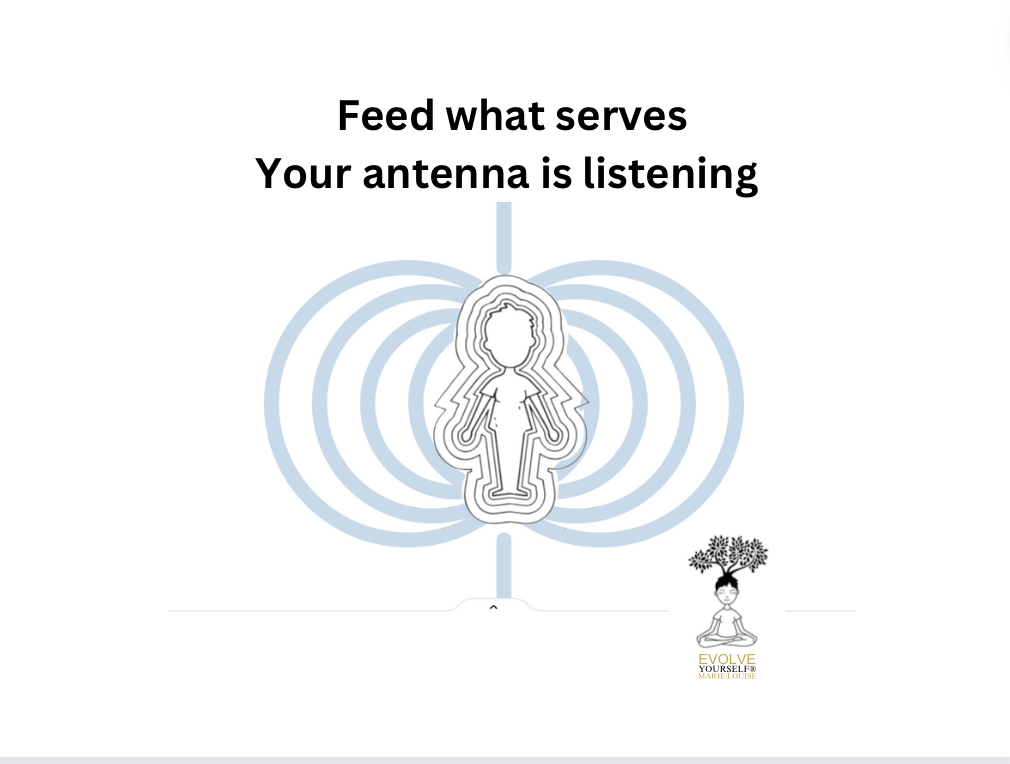
"The full spectrum of body/mind functioning vibrates at its collective frequency—the body/mind/spirit vessel, named YOU. I experience the human being not simply as an isolated physical organism, but as a multidimensional participant within a larger field of life.
We are subject and object. Individual and collective. We perceive the world through the particular organisation of our own human instrument, while simultaneously participating in and influencing the environments and relationships of which we are a part.
From this perspective, consciousness is not only something occurring privately “inside” us. Our actions, reflexes, attention, emotional states, choices and expressions enter the field in which we collectively live.
This is one of the conceptual lenses through which I explore human development: as the individual organism changes its relationship with awareness, what becomes possible within the collective also changes.
The often-told story of the “hundredth monkey” has been used as a metaphor for this possibility — the idea that when something shifts sufficiently within a group, a wider field of possibility may also shift. I don't need the story to function as scientific proof for it to remain an interesting contemplation.
Nature continually shows us that no organism exists independently of its environment. We influence and are influenced. We receive and transmit. We participate.
So I remain curious:
What am I contributing to the field through the way I am being?
Subjective — What am I experiencing?
Objective — What can we observe about the body, brain, nervous system, behaviour and environment?
Relational — What happens between organisms?
Collective — How do patterns, behaviours, ideas and ways of being propagate through groups and culture?
Universal / spiritual — What is the relationship between the individual expression of life and the greater intelligence or field of life itself?
Mystery — What can be experienced or contemplated without needing to be prematurely explained?
Perhaps this is another way of understanding responsibility, not as blame or burden, but as recognising that our expression participates in the whole.
'Discover Worlds Within' by Marie Louise

5 Reasons Tuning Into Joy is a Tonic for Wellness
5 reasons joy is a tonic of wellness with Marie Louise
In the pursuit of wellness, we often focus on physical health, diet, and exercise, but we may overlook the profound impact attention to Joy can have on our overall well-being. Joy isn't just a fleeting emotion; it's a state of being that can positively influence our mental, emotional, and physical health. We have the ability to cultivate the environment in which joy can thrive with attention. Here are five compelling reasons why tuning into joy can be a powerful and potent tonic for wellness.
Boosts Immune System:
Research has shown that positive emotions, such as joy, can enhance the function of the immune system. When we experience joy, our bodies release neurotransmitters like dopamine and endorphins, which have been linked to strengthening the immune response. Regularly tapping into feelings of joy can help bolster our body's defenses against illness and promote overall health.
Reduces Stress and Anxiety:
Joy has a remarkable ability to counteract stress and anxiety. When we experience joy, our bodies naturally relax, and stress hormones like cortisol decrease. By intentionally cultivating moments of joy through activities we love or spending time with loved ones, we can create a buffer against the negative effects of stress, leading to greater emotional resilience and a calmer state of mind.
Enhances Mental Clarity and Creativity:
Joy has a way of clearing the mental fog and enhancing cognitive function. When we're joyful, our minds are more open, creative, and receptive to new ideas. This heightened mental clarity can lead to increased productivity, problem-solving abilities, and a greater sense of purpose and fulfillment in our daily lives.
Improves Relationships:
Joy is contagious, and when we radiate joy, it can positively impact the people around us, strengthening our relationships and social connections. Joyful interactions foster empathy, compassion, and understanding, creating a supportive environment where communication flows more easily, conflicts are resolved more peacefully, and bonds are deepened.
Promotes Overall Well-being:
Consciously choosing to give attention to things that make you joyful invigorates the pathways of joy in your brain to become the new automated response to life. In neuroscience, it's said that "neurons that fire together wire together." By consciously firing and wiring moments of joy, this neural feedback becomes the new norm. Conversely, feelings of the critic and judgment bias often create a deep reflex of toxic biochemistry and, if played long enough, can become heavy and depressing. Imagine the transformative effect of firing and wiring moments of joy into your neural pathways, creating a default state of positivity and resilience.
Cultivating our ability to attune and give attention to the things that make us feel good is by far one of the greatest gifts we can give to ourselves and the world around us. It isn’t always easy to see the good around our world, but with a little awareness, it might be worth the effort. So, here is the invitation to give wellness a crack and let your experience of doing so raise new evidence that you are worthy of your own attention. Let's make joy a priority and embrace its transformative effects on our exploratory and open wellness journey.
Author
Evolve Yourself® with Marie Louise
Marie Louise is a seasoned facilitator of wellbeing processes and activations, having positively influenced the lives of thousands of individuals across the globe. With a profound understanding of human nature and relationships, she has elevated countless individuals, enhancing their capacity to thrive.